5 Reasons You Need a Burner Management System (BMS)
By Profire TeamApril 6, 2026
In industrial process heating, safe and reliable combustion is not optional. Whether you operate line heaters, heater treaters, glycol dehydrators, tank heaters, or other fired equipment, burner performance directly affects safety, uptime, and operating efficiency.
initiates a safe shutdown if something goes wrong.
For many operators, the question is no longer whether a burner management system is useful. It’s whether continuing with manual burner control practices, aging flame safeguard systems, or outdated operator controls creates unnecessary risk, downtime, and operational uncertainty.
What is a Burner Management System?
A burner management system is a safety control system designed to manage the startup, operation, and shutdown of combustion equipment.
Its role is to ensure that ignition happens in the proper sequence, and only when safe operating conditions are present. Once the burner is running, the system continues to monitor flame status and other critical inputs. If it detects an unsafe condition, it trips the burner and follows the defined shutdown logic.
In practical terms, a BMS helps standardize burner operation, reduce manual intervention, and improve visibility into what happens before and after a shutdown. In many applications, a BMS also works alongside integrated systems for:
combustion control,
process monitoring,
alarm notification, and
SCADA connectivity.
Before we dive into how a burner management system works and the reasons why you need one, it’s important to distinguish that a BMS is a safety system, not a combustion control system (CCS), though the two are often integrated.
How Does a Burner Management System Work?
Most burner management systems follow the same basic logic, whether they are protecting industrial burners on line heaters or more advanced combustion equipment in larger process applications.
1. It verifies permissives
Before ignition, the system checks that required conditions are met. That may include pressure switches, fuel valves, shutdown valves, valve position status, airflow or draft conditions (depending on the system design), temperature limits, and proof that the burner is ready to begin a timed purge.
2. It manages the purge sequence
A burner management system controls the purge sequence before ignition. This step helps reduce and dilute residual combustible gases from the combustion chamber, and reduce fired equipment hazards before the pilot flame is introduced.
3. It establishes pilot flame and main burner light-off
After permissives are satisfied, the BMS begins with the light-off sequence. Depending on the application, that may include energizing ignition hardware, proving pilot flame with flame detectors or flame switches, and then allowing the main burner to light.
4. It supervises flame continuously
After ignition, the system monitors flame detection and verifies that the flame remains present. Flame safety depends on continuous supervision, not just a successful startup.
5. It initiates a safe shutdown when needed
If a flame is lost, a permissive changes state, or another critical condition falls out of range, the burner management system trips the burner and shuts off fuel according to the programmed safety sequence.
6. It records diagnostics and supports process monitoring
Modern burner management systems often include event logs, alarm history, and process monitoring tools. These features help operators and technicians understand what tripped first and what the system was doing before shutdown.
1. A Burner Management System Improves Safety
The most immediate reason to install a burner management system is safety.
Combustion equipment can become dangerous quickly if startup steps are skipped, interlocks are bypassed, flame is not properly proven, or fuel shutoff does not happen when it should. A BMS helps reduce that exposure by enforcing a defined operating sequence and verifying safe conditions before and during burner operation.
Instead of depending on manual judgment for each startup, the system checks the same inputs in the same order every time. If those conditions are not met, ignition does not proceed.
That consistency matters. Manual BMS practices, outdated flame safeguard systems, and inconsistent operator controls can all increase exposure to safety hazards, fired equipment hazards, gas leaks, and unstable burner operation.
A burner management system also helps manage critical flame safety tasks, such as pilot flame verification, continuous flame detection during operation, and fuel shutoff response when unsafe conditions are detected.
2. A Burner Management System Supports Compliance Efforts
Compliance depends on whether combustion equipment is designed, operated, and safeguarded in a way that aligns with applicable codes, standards, and authority requirements.
A burner management system helps support that structure by implementing defined interlocks, flame supervision, startup and shutdown logic, and documentation practices that are easier to review and inspect. It also creates a more defensible burner management approach than older manual or loosely integrated control arrangements.
Depending on the application, operators may evaluate their burner management approach against standards and practices such as NFPA 85, NFPA 86, NFPA 87, and API 556. In some discussions, teams may also compare a burner management system to a broader Safety Instrumented System, but the two are not interchangeable.
That does not mean every burner management system automatically guarantees compliance. Final requirements still depend on the application, jurisdiction, and Authority Having Jurisdiction. But a properly designed BMS can support compliance efforts by helping operators move toward a more structured safety system for fired equipment.
3. A Burner Management System Helps Reduce Downtime
For many operations, downtime is one of the strongest business cases for control upgrades.
When a burner trips unexpectedly, the impact often extends beyond the burner itself. You may lose heating capacity, interrupt production, dispatch a technician, and spend valuable time figuring out what caused the shutdown.
A modern BMS automates light-off sequences, pilot flame proving, and main burner startup. That reduces the variability that leads to nuisance trips and failed starts.
Better diagnostics
When the system records event history, alarm notification, and status before a trip, technicians can diagnose the issue faster.
Better remote visibility
When the BMS is tied into a SCADA system, teams can monitor status, alarms, and key operating conditions without waiting for a field visit.
Better standardization
A burner management system makes it easier to apply the same logic, operator expectations, and control philosophy across similar equipment populations.
4. A Burner Management System Can Improve Combustion Stability and Efficiency
A burner management system is fundamentally a safety system, but in many applications, it also supports more consistent and repeatable burner operation during startup and shutdown sequences.
More consistent burner operation can help reduce unnecessary cycling, minimize temperature swings, and support a more controlled process. When burner safeguards are paired with combustion control, process monitoring, and integrated systems, the result is often a smoother response to changing process demand.
That does not mean a BMS alone solves every combustion problem. Burner design, fuel quality, instrumentation, tuning, and fuel-air ratio still matter. Liquid fuels and gaseous fuels also bring different operating considerations. But better control over burner sequencing and operating conditions can help reduce instability caused by inconsistent startups, manual adjustments, or weak diagnostics.
In practice, more consistent operation can help operators identify and address inefficient conditions earlier. For operations running on fuel gas: fewer nuisance shutdowns, clearer operating data, and more repeatable burner behavior help operators respond earlier to problems and avoid inefficient operating patterns.
5. A Burner Management System Helps Reduce Hidden Risk
One of the most overlooked reasons to upgrade is that legacy burner control setups often continue to operate long after they have stopped being easy to support, troubleshoot, or scale.
Older systems may still light the burner, but that does not mean they provide the visibility or consistency modern operations need. In many cases, they rely too heavily on manual practices, tribal knowledge, limited process monitoring, and local intervention.
That becomes a problem when experienced personnel are unavailable, when sites need standardized controls across similar assets, or when troubleshooting must happen quickly under pressure.
Modern Burner Management Systems generally offer:
clearer diagnostics,
stronger standardization,
better integrated systems, and
more support for control upgrades than older arrangements.
Over time, that can reduce support burden and help operators make better decisions about maintenance, response, and upgrade planning.
Signs Your Current Burner Controls May Be Outdated
Your current burner controls may be due for an upgrade if you are dealing with:
repeated nuisance shutdowns
inconsistent startups or relights
weak flame detection or unreliable pilot flame proving
limited or unclear trip diagnostics
heavy reliance on manual reset or operator intervention
poor visibility into burner status from a SCADA system
aging flame safeguard systems that are difficult to service
recurring valve issues or shutdown valve problems
different control behavior from site to site on similar equipment
Even if the burner is still operating, those issues can point to a control approach that is becoming harder to support, less efficient to troubleshoot, and more exposed to avoidable risk.
Key Components of a Burner Management System
Most burner management systems include several core elements.
Controller or logic platform
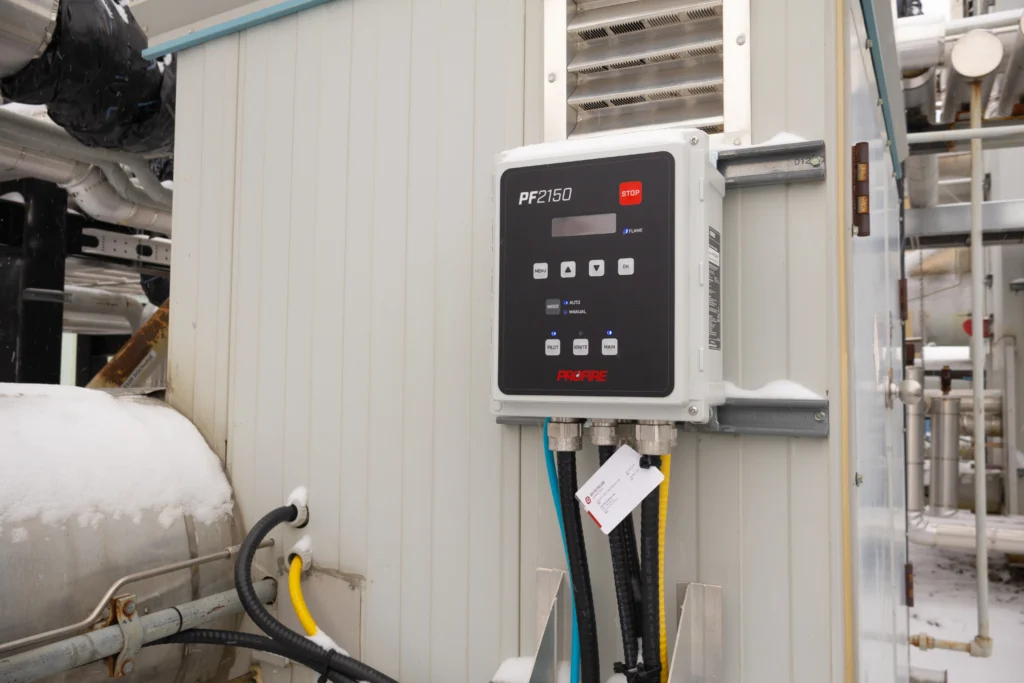
This manages the sequence, operator controls, and safety inputs for the burner management system.
Flame detectors or flame switches
These devices support flame detection by proving pilot flame and main burner flame during operation.
Ignition hardware
Depending on the application, that can include ignition electrodes, ignition transformers, or other light-off hardware.
Fuel valves and shutdown valves
These devices manage fuel flow and execute fuel shutoff when a trip condition occurs.
Local panel and operator interface
A local panel gives field personnel access to status, controls, and diagnostics.
Alarm notification and diagnostics
These functions provide event history, process monitoring, and better troubleshooting support.
SCADA system connectivity
When communications are enabled, the BMS can support visibility for alarms, status, and key operating conditions through a SCADA system.
In the oil and gas industry, that often includes line heaters, heater treaters, glycol dehydrators, tank heaters, and gas production units. Burner Management Systems are crucial for any combustion equipment. They ensure:
Safe startups
Flame safety during operation
Controlled shutdowns
This helps maintain both safety and continuous processing.
Some sectors, such as power generation and other large industrial heating applications, may use different burner management philosophies or more complex safety architectures. But the core requirement is the same: safe light-off, supervised flame, and reliable shutdown when the process moves outside acceptable limits.
Cost and ROI Considerations
A burner management system is an investment, so cost matters. But the decision should not be based on hardware prices alone.
The more useful question is what the current control approach already costs you.
That cost may show up as:
repeated callouts
nuisance shutdowns
longer troubleshooting time
inconsistent startups
avoidable downtime
weak process monitoring
limited visibility after trips
higher operational risk from aging controls
added service burden from outdated flame safeguard systems
In many cases, the return on investment comes from cumulative improvements, rather than one dramatic event. Fewer shutdowns, faster troubleshooting, clearer operator controls, and better remote visibility can quickly add up across multiple sites or similar assets.
Integration With Existing Systems
Some operators delay upgrades because they are concerned about integration. That concern is reasonable. A burner management system often needs to interact with:
temperature controls,
process monitoring tools,
shutdown circuits,
alarm notification,
local panel design, and
plant-level SCADA software.
But integration challenges are not a reason to avoid modernization. They are a reason to plan it properly.
A well-selected burner management system should support the site’s operating requirements, while improving visibility, safety logic, and maintainability. For many operations, that also means choosing a platform that can communicate with an existing SCADA system, so burner status, fuel gas conditions, and operating alarms are easier to monitor remotely.
Choosing the Right Burner Management System
Not every burner management system is the same, and the best fit depends on the application.
The right solution should reflect the burner arrangement, fuel train complexity, operating environment, monitoring requirements, and level of control needed at the site. Some applications require a more straightforward safeguard package for industrial burners or process burners. Others need more advanced sequencing, diagnostics, integrated systems, or communications for larger combustion equipment.
That is why selection should not focus only on features. It should focus on whether the system matches the actual risks, operating demands, and service realities of the equipment it is meant to protect.
Compare Your Burner Management System Options
Choosing the right BMS starts with understanding which option fits your burner application, control requirements, and operating environment.
Use our BMS comparison tool to compare Profire Burner & Combustion Management Solutions and identify the best fit for your equipment, fuel gas requirements, and site needs.
Next step: Explore the comparison tool to review your burner management system options and narrow down the right solution for your application.
Why Many Operators Upgrade to a Profire Burner Management System
A Profire burner management system does more than automate burner startups. It helps create a safer, more consistent, and more supportable approach to combustion control.
For operations still relying on manual practices, aging flame safeguard systems, limited process monitoring, or outdated operator controls, the risks are often larger than they appear on the surface. A modern Profire BMS can help reduce those risks while improving uptime, troubleshooting, and confidence in burner operation.
If your current setup depends too heavily on manual intervention or provides little visibility when something goes wrong, a burner management system may no longer be a nice-to-have. It may be a necessary step toward safer and more reliable operation.
Talk to our team of experts to find out which Profire burner management system is right for your operations.BOOK A CONSULT
Frequently Asked Questions About Burner Management Systems
What is a burner management system?
A burner management system is a safety system that manages burner startup, flame detection, interlocks, fuel shutoff, and shutdown logic for combustion equipment.
How do burner management systems improve safety?
Burner management systems improve safety by verifying permissives, managing the purge sequence, proving pilot flame, supervising the main burner, and shutting off fuel when unsafe conditions are detected.
What standards are often discussed with a burner management system?
Depending on the application, teams may evaluate burner safeguards against standards such as NFPA 85, NFPA 86, NFPA 87, and API 556, along with local jurisdictional requirements.
Can a burner management system connect to a SCADA system?
Yes. Many modern burner management systems support SCADA connectivity for process monitoring, alarm visibility, and remote troubleshooting.
When should you upgrade older burner controls?
It is usually time to evaluate control upgrades when you see repeated nuisance trips, weak flame detection, poor diagnostics, outdated flame safeguard systems, or limited remote visibility into burner status.
Is a burner management system the same as a Safety Instrumented System?
No. A burner management system may be part of a broader site safety strategy, but it’s not the same thing as a full Safety Instrumented System.