AER Directive 060 Update: Flare Ignition and Combustion Control Retrofit Planning Before 2030
By Profire Team
July 15, 2026
The March 2026 AER Directive 060 update gives Alberta oil and gas engineering and operations teams a clear reason to review flare ignition controls, combustion controls, and fired-equipment infrastructure before 2030 planning becomes compressed.
The update doesn’t affect every site or asset the same way, and it doesn’t mean every operator needs to retrofit immediately. It does create a practical planning window. For affected systems, the years leading up to January 1, 2030 are the right time to review ignition reliability, controls architecture, documentation, maintenance routines, reporting workflows, and long-term supportability.
For engineering teams, the main question goes beyond what changed. Directive 060 compliance readiness comes down to whether current flare ignition, burner management, and combustion control systems will be practical to operate, maintain, troubleshoot, document, and support as these requirements take effect.
What this article covers
What changed in the March 2026 update, and which requirements take effect January 1, 2030
Why flare ignition is usually the most direct place to start a retrofit review
How the biweekly screening exemption can reduce recurring field checks where it applies
What the reporting and preventive maintenance changes mean for system documentation
Where venting requirements and adjacent fired equipment belong in the same review
A five-question framework for scoping retrofit work before timelines tighten
What changed in the March 2026 AER Directive 060 update?
The March 2026 edition of Directive 060 added several requirements that take effect January 1, 2030. The most relevant changes for flare ignition and combustion control planning include:
Permanent and temporary flares installed, replaced, or relocated on or after January 1, 2030 must have a system or engineered controls that ensure automatic or continuous ignition.
Licensees, operators, or approval holders must implement a documented preventive maintenance program for flare stack inspection and maintenance.
Active flares must undergo fugitive emissions screening every two weeks starting January 1, 2030, unless they have a system or engineered controls that ensure automatic or continuous ignition.
Duty holders must report the monthly volume of unlit flare gas and retain records tied to flare stack screenings and maintenance activities.
Glycol dehydrators installed, replaced, or relocated on or after January 1, 2030 must control methane emissions.
Those changes move Directive 060 readiness into system design and field support. For engineering teams, the next step is practical: identify which systems fall under the 2030 requirements, which ones already create field or documentation issues, and which retrofits could reduce future maintenance, reporting, or troubleshooting burden.
Why should the 2030 date start a retrofit conversation now?
For Alberta upstream and midstream operators, January 1, 2030 may sound far enough away to manage later. In capital planning terms, it isn’t.
A retrofit can involve engineering review, budget approval, equipment selection, procurement, field scheduling, installation, commissioning, training, and documentation updates. If several sites need review, the planning burden grows, and late projects can add lead time and scheduling pressure.
The first step is to identify which systems may be affected by the installed, replaced, or relocated language in Directive 060 and which assets already create operational friction. Some sites may need a dedicated flare ignition retrofit. Others may need a broader burner management or combustion control review, or a site assessment before a platform is selected.
Why is flare ignition often the most direct place to start?
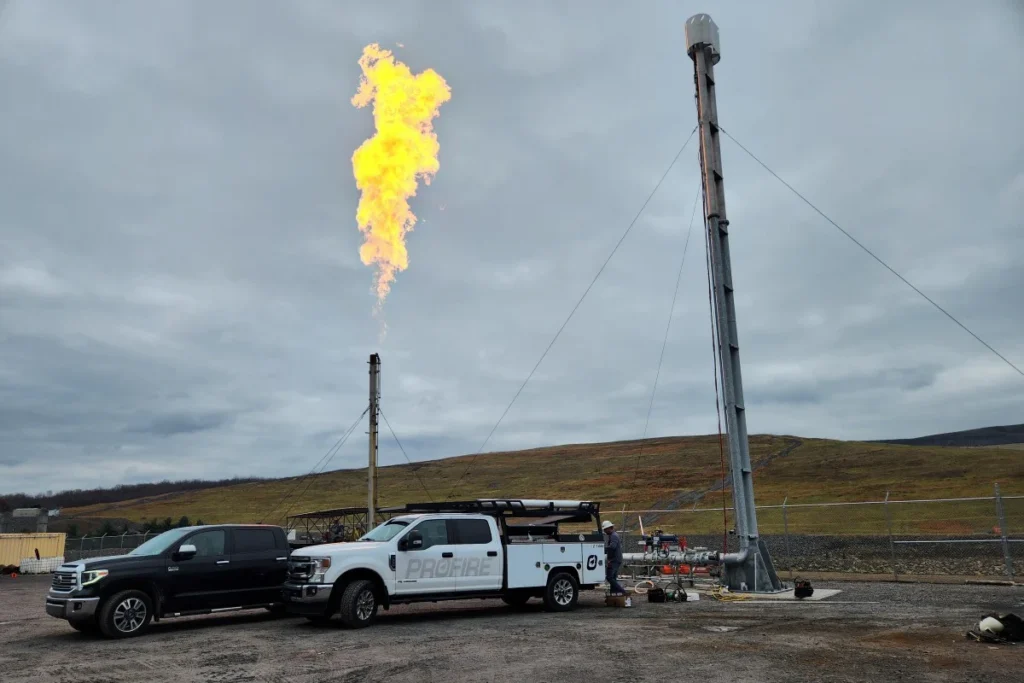
Flare ignition retrofits are often the most direct place to start because they connect straight to the March 2026 update. Effective January 1, 2030, permanent and temporary flares installed, replaced, or relocated must have a system or engineered controls that ensure automatic or continuous ignition, and the directive now requires a documented preventive maintenance program for flare stack inspection and maintenance.
That makes flare ignition both a controls issue and a compliance-readiness issue for Alberta-regulated sites. A flare that depends on weak ignition visibility, inconsistent field checks, or limited event information can affect maintenance response, troubleshooting, reporting confidence, and approval for future work.
A practical flare ignition review should ask:
Can the system ensure automatic or continuous ignition where required?
Can operators verify flame status and ignition performance?
Can engineering retrieve useful event history, alarm information, or operating data?
Can maintenance teams inspect, service, and document the system without unnecessary field friction?
For simpler flare ignition applications, Profire’s PF2150-F can provide a dedicated flare ignition path with a familiar user interface, flame detection, remote connectivity, and support for improved flaring performance. For applications that require more advanced burner management, diagnostics, data logging, or forced-draft capability, Profire can help evaluate whether a PF2200 or PF3100 platform is the better fit.
The operational benefit: fewer manual screening obligations where the exemption applies
One of themost practical reasons to review flare ignition early is the screening exemption. Starting January 1, 2030, Directive 060 requires fugitive emissions screenings every two weeks on all active flares. Active flares with a system or engineered controls that ensure automatic or continuous ignition are exempt from that biweekly screening requirement.
Where the exemption applies, automatic or continuous ignition may reduce recurring field checks and screening records while giving engineering a stronger lifecycle argument for the retrofit. The value isn’t only labor reduction. A properly selected and supported ignition system can also give teams a clearer view of flare status and a stronger foundation for maintenance and reporting workflows.
Reporting and maintenance need stronger system support
Directive 060 now places more attention on what happens after equipment is installed. A retrofit that looks acceptable on a drawing can still create problems if the site can’t support the maintenance and reporting expectations that come with it.
Monthly reporting
Beginning January 1, 2030, duty holders must include the monthly volume of unlit flare gas from the flare stack by facility identifier, along with the number of completed fugitive emission flare stack screenings, in monthly volumetric reporting.
That requirement should push teams to review how ignition performance, event history, field observations, and operating data are captured. A modern burner management or flare ignition control system can’t replace reporting responsibilities, but it can support better visibility into system status, events, alarms, and operating conditions.
Flare stack preventive maintenance
The updated directive also makes flare stack preventive maintenance a documented requirement, bringing inspection, maintenance, repair, and recordkeeping into the retrofit conversation earlier.
A strong retrofit plan should account for how the system will be inspected, maintained, tested, documented, and repaired, as well as what startup, commissioning, training, and service support the site will need after installation.
Directive 060 readiness is not limited to flare stacks
Flare ignition may be the first review area, but Directive 060 is broader than flare stacks. It addresses flaring, incinerating, enclosed combustion, and venting, and it also applies to certain pipeline installations that convey gas, including line heaters.
That broader scope is why Alberta operators should include adjacent fired equipment and gas-handling systems in retrofit planning where those systems affect site performance, emissions management, or supportability. Line heaters may not have a new standalone subsection in the March 2026 update, but they can still belong in the planning conversation when they’re part of a gas-conveying pipeline installation or broader combustion system.
Glycol dehydrators also deserve attention. Directive 060 already sets methane emission limits for certain existing and pre-2030 dehydrators, and it adds a 2030 requirement to control methane emissions from glycol dehydrators installed, replaced, or relocated on or after January 1, 2030. For future dehydrator projects, glycol dehydrator methane emissions should be part of the design basis, rather than a late-stage compliance check.
Where do venting requirements fit into retrofit planning?
The March 2026 update focused largely on flaring, but Directive 060’s venting requirements deserve a place in the same review. Section 8 of the directive sets an overall vent gas limit at the site level and equipment-specific vent gas limits for pneumatic devices, compressor seals, and glycol dehydrators.
Pneumatic devices are a practical example. Pneumatic instruments installed on or after January 1, 2022 must prevent or control vent gas, and pneumatic pumps installed on or after that date that operate more than 750 hours per year must not emit vent gas. For older equipment, level controllers that actuate more often than every 15 minutes must use a relay designed to reduce transient venting or have their actuation frequency adjusted, and other pre-2022 pneumatic instruments must meet a manufacturer-specified steady-state vent rate below 0.17 m³/hr.
These requirements aren’t new in the March 2026 edition, but they matter for retrofit planning for two reasons. A site review focused only on the flare stack can miss vent sources that already carry compliance obligations, inventory requirements, and recordkeeping expectations. And when vent gas is captured and destroyed instead of released, combustion equipment enters the picture, which brings ignition reliability, controls, and documentation back into the same readiness conversation.
That second point has a performance expectation attached to it. Where equipment is used to control vent gas, Directive 060 requires that it conserve or control at least 95 percent of the vent gas captured and operate at least 90 percent of the time vent gas is emitted. A control device that trips repeatedly, fails to relight, or gives operators no clear indication of flame status makes that harder to demonstrate. For sites weighing vent gas capture as part of their methane reduction plans, ignition reliability and event history are part of the design basis, not a detail to sort out during commissioning.
Where a burner management system retrofit can reduce future friction
A well-planned burner management system retrofit should do more than replace aging controls. It should reduce the friction engineering and operations already feel, especially when existing equipment is still running but becoming harder to document, troubleshoot, or support.
Common signs include nuisance trips, difficult flame failure troubleshooting, limited alarm history, poor documentation, inconsistent site setups, aging components, weak spare parts confidence, and unclear maintenance records.
A retrofit can help address several of those issues at once:
Ignition reliability: Better ignition control and flame detection can reduce uncertainty around whether the system lit and stayed lit.
Process performance: Improved combustion control can help the fired equipment run more consistently, especially where better temperature control, PID control, or forced-draft capability is needed.
Troubleshooting: Diagnostics, event logging, timestamps, and clearer user interfaces can help field teams identify what happened faster.
Documentation readiness: Better system records can support maintenance programs, reporting workflows, commissioning packages, and engineering review.
Standardization: Similar retrofit paths across similar assets can reduce training burden, simplify support, and make future project work easier to approve.
Lifecycle supportability: A retrofit should leave the site with equipment, documentation, parts, training, and service support that operations can use after the project team leaves.
This is where engineering and operations priorities meet. Engineering needs a technically defensible path that fits requirements and reduces approval risk. Operations needs equipment that’s easier to troubleshoot, maintain, and support in the field.
Choosing the right Profire retrofit path
Profire’s role isn’t to force every site into the same product path. The right solution depends on the application, existing infrastructure, required control capability, documentation needs, communication requirements, and long-term support expectations.
For simple flare ignition systems, the PF2150-F may be the right fit. For single burner or dual burner natural draft applications that need advanced monitoring, diagnostics, event logging, Modbus, data logging, and practical configurability, the PF2200 platform may be more appropriate. For more complex combustion control applications, including multi-burner, multi-pilot, forced-draft, combustor, or flare applications, the PF3100 can support a broader control architecture.
A useful site review should look at flare ignition, burner management, fired-equipment needs, vent gas sources, emissions-related obligations, troubleshooting pain points, maintenance practices, communication requirements, and documentation gaps. Profire’s teams can support that review through sales, service, engineering, consulting, startup and commissioning, and field support.
A practical retrofit readiness framework
Engineering teams can start with five questions.
1. Which systems may be affected by the 2030 requirements?
Identify flares, dehydrators, combustors, incinerators, line heaters, and related fired equipment that may be installed, replaced, relocated, or materially reviewed before 2030.
2. Which systems already create operational friction?
Look for nuisance trips, flame failures, hard-to-diagnose shutdowns, ignition uncertainty, weak event history, and aging controls that require too much field attention.
3. Where does documentation fall short?
Review maintenance records, startup packages, inspection routines, operator notes, alarm history, vent gas inventories, and reporting workflows. The directive increases the value of retrievable, defensible records.
4. Which retrofit path fits the application?
A simple flare ignition application does not need the same control architecture as a forced-draft combustor or a complex burner management system. Match the platform to the work the site actually needs.
5. What support will the site need after startup?
A retrofit is only successful if operations can run it, maintenance can support it, engineering can defend it, and leadership can see why the investment reduces future burden.
Key takeaways for Directive 060 retrofit planning
Start planning before 2030 gets closer. The update gives teams time to review affected systems before engineering, budgeting, procurement, installation, and commissioning timelines tighten.
Review flare ignition controls first. Automatic or continuous ignition is one of the most direct retrofit considerations, especially where it may support future screening exemptions.
Look beyond the flare stack. Directive 060 compliance readiness may also involve line heaters, combustors, incinerators, dehydrators, burner management systems, vent gas sources, and other fired equipment tied to site performance.
Match the retrofit path to the site. Some applications may need a flare ignition retrofit. Others may need a burner management system retrofit, a combustion control retrofit, or a broader site review.
Use the update as a planning trigger. Profire can help teams assess current systems, identify retrofit options, and plan upgrades that are easier to operate, maintain, document, and support.
Frequently Asked Questions About the March 2026 AER Directive 060 Update
What changed in the March 2026 AER Directive 060 update?
The update adds 2030 requirements related to automatic or continuous ignition, flare stack maintenance, active flare screening, unlit flare gas reporting, recordkeeping, and glycol dehydrator methane control.
When do the new flare ignition requirements apply?
They apply to permanent and temporary flares installed, replaced, or relocated on or after January 1, 2030.
Can automatic or continuous ignition reduce screening requirements?
Yes, where the exemption applies. Active flares with engineered controls that ensure automatic or continuous ignition are exempt from the biweekly fugitive emissions screening requirement.
Did the March 2026 update change venting rules for pneumatic devices?
No. Vent gas limits for pneumatic instruments and pumps, including the level controller actuation requirements, were already in effect under Directive 060. The main venting-related change in the March 2026 edition applies to glycol dehydrators installed, replaced, or relocated on or after January 1, 2030, which must control methane emissions.
Talk to Profire about Directive 060 retrofit readiness
The March 2026 AER Directive 060 update gives teams a reason to review system readiness while there’s still time to plan the work properly.
For engineering teams, that means reviewing flare ignition, combustion controls, fired equipment, documentation, and supportability before 2030 requirements move closer. For operations, it’s a chance to reduce nuisance issues, improve troubleshooting, and move away from equipment that’s becoming harder to support. For compliance and leadership teams, it can support clearer planning, stronger records, and better confidence in the path forward.
Profire can help identify whether the right path is a PF2150-F flare ignition solution, a PF2200 or PF3100 burner management platform, a site review, a combustion control retrofit, or a site-specific combination.
Talk to Profire about Directive 060 retrofit readiness to identify the retrofit path that fits your Alberta site before 2030 planning becomes time-sensitive.
Tell Us About Your Application
A Profire Specialist Will Contact You Within 24 Hours