Burner Management and Combustion Control for Refinery Process Heating
Refinery burner management systems manage purge, light-off, pilot and main flame supervision, and safe shutdown on process heaters that sit inside continuous units, where one trip can cut throughput across the production line. Profire, a CECO Environmental brand, supplies that burner management and combustion control for new-build, retrofit, and legacy heater projects, working within the site’s engineering, DCS, and SIS requirements rather than replacing them.

Burner Management Systems for Refinery Fired Equipment

Fuel Trains for Refinery Fuel Gas Service

Combustion Control for Continuous Refinery Units

Refinery Subindustries We Serve
-
 Crude & Vacuum Distillation
-
 HYDROHEATING & PRODUCT TREATING
-
 CONVERSION & HEAVY OIL PROCESSING
-
 HYDROGEN, SULFER, & UTILITY SYSTEMS
-
 EMISSION CONTROL, FLARES & WASTE GAS MANAGEMENT
-
 STORAGE, TERMINALS, & PRODUCT MOVEMENT
Why Refining Operations Choose Profire
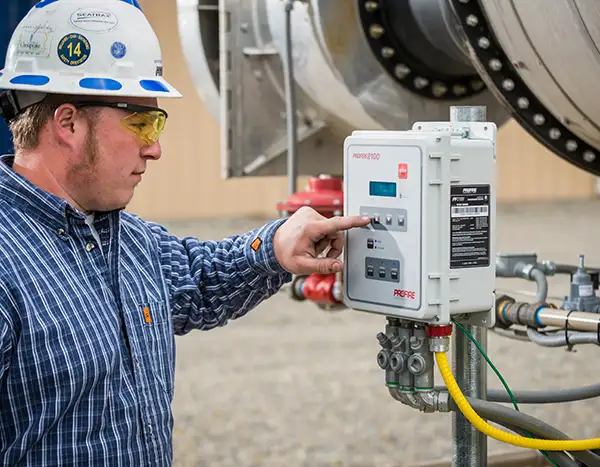
Repeatable Purge, Light-Off, and Shutdown
Multi-burner refinery heaters need every pilot proven before main fuel opens, and every burner supervised once it does. Profire controllers sequence purge and ignition, supervise pilot and main flame individually, and close fuel on any failed permissive, with the same logic applied heater to heater.
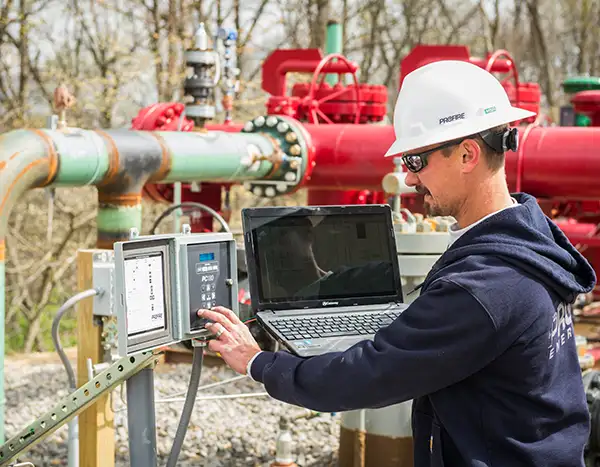
Control Room Visibility & Faster Troubleshooting
Board operators need to know what's running, what tripped, and what happened before a shutdown. Profire controllers send first-out indication, event history, and burner status to the DCS over Modbus, so the trip cause is on the console before anyone walks the unit.

Stable Heat Through Fuel Gas and Load Changes
Refinery fuel gas changes composition as units come on and off line, and heater duty moves with charge rate. Fuel/air ratio control and temperature control help heaters hold coil outlet temperature through both, without running extra excess air as a safety margin.
Modernization Without Unnecessary Disruption
Refinery heater upgrades have to fit existing field devices, DCS infrastructure, site standards, and an outage window. PF3100 is built for API heaters and multi-burner, multi-pilot appliances, and is certified to IEC 61508 and SIL 2 Capable. Profire supports the project from application review through commissioning and training.
Refinery Fired Equipment Profire Supports

API FIRED HEATERS / PROCESS HEATERS

CRUDE CHARGE HEATERS
VACUUM HEATERS

HYRDOTREATER / HYDROCRACKER CHARGE HEATERS

CATALYTIC REFORMING / HYDROGEN PLANT HEATERS
AMINE & GLYCOL REBOILERS

HEAT MEDIUM / HOT OIL HEATERS

THERMAL OXIDIZERS, INCINERATORS, COMBUSTORS, & FLARES
REFINERY FREQUENTLY ASKED QUESTIONS
What is process heating used for in refineries?
Process heating helps refineries heat, vaporize, separate, convert, treat, and condition hydrocarbons into finished and intermediate products. Fired heaters, reboilers, hot oil heaters, and other fired equipment support major refinery units such as crude distillation, vacuum distillation, hydrotreating, reforming, conversion, utilities, and emissions-control systems.
Where are burner management systems used in refineries?
Burner management systems are used on refinery fired equipment that needs controlled ignition, purge sequencing, permissive checks, flame supervision, and safe shutdown. In refineries, this can include process heaters, crude charge heaters, vacuum heaters, hydrotreater and hydrocracker charge heaters, reboilers, thermal oxidizers, combustors, incinerators, and flares.
Why do refinery fired heaters need reliable burner management?
Refinery fired heaters run inside continuous units, so a trip on a crude or vacuum heater can cut throughput on every unit it feeds. Many refineries specify heater protective systems against API 556, which covers instrumentation, control, and protective systems for gas-fired refinery heaters. A BMS manages purge and ignition, proves pilot and main flame, and shuts fuel off when unsafe conditions are detected.
How does a BMS improve control room visibility in a refinery?
A BMS sends burner status, alarms, first-out conditions, and event history to the DCS, so the board operator can see why a heater tripped without walking the unit. In one published project, eight API-aligned multi-burner process heaters were moved onto PF3100 controls with Modbus and DCS integration and full data and event logging.
What refinery fired equipment does Profire support?
Profire supports refinery fired equipment such as process heaters, API fired heaters, crude charge heaters, vacuum heaters, hydrotreater and hydrocracker charge heaters, reboilers, hot oil heaters, thermal oxidizers, incinerators, combustors, and flares. The right solution depends on the application, burner configuration, fuel train, draft type, flame detection needs, communication requirements, site standards, and project scope.
Can Profire support API fired heater or multi-burner applications?
Yes. The PF3100 platform is built for API heaters and multi-burner, multi-pilot appliances, in natural or forced draft, including fuel/air ratio control. PF3100 is certified to IEC 61508 and SIL 2 Capable. Each project is still reviewed against site engineering, DCS, SIS, and documentation requirements, since Profire supplies burner management and combustion control, not the site’s overall safety-system design. More on combustion control in refinery heaters.
Which Profire controller fits a refinery application?
PF3100 is the usual fit for API process heaters, multi-burner and multi-pilot heaters, and anything needing fuel/air ratio control. Not every refinery appliance needs that scale. Single and dual burner reboilers, hot oil heaters, tank heaters, and utility equipment often fit PF2200, which covers forced draft and adds diagnostics and data logging. Compare the controllers side by side.
What refinery fired equipment does Profire support?
Profire supports refinery fired equipment such as API fired heaters and process heaters, crude charge and vacuum heaters, hydrotreater and hydrocracker charge heaters, catalytic reforming and hydrogen plant heaters, amine reboilers, hot oil heaters, thermal oxidizers, incinerators, combustors, and flares. On refinery heaters, scope usually turns on burner and pilot count, flame detection method, and how the BMS hands off to the DCS and any SIS.
What should refineries consider when modernizing legacy fired heater controls?
Refineries should consider burner and pilot configuration, existing field devices and flame scanners, DCS and SIS interfaces, shutdown logic, fuel train scope, documentation, outage timing, operator training, and long-term supportability. Outage timing usually drives the rest. The more of the scope that can be configured, wired, and tested before the turnaround, the shorter the window the heater needs to be down.
What documentation is provided at submittal and turnover?
Refinery BMS submittals typically include a cause-and-effect matrix, I/O list, wiring diagrams, fuel train P&ID, and the configured setpoint and permissive list, with factory and site acceptance test records at turnover. Profire’s engineering and design team works with the project on that package, and the exact scope is confirmed during application review.
Tell us about your application
A Profire Specialist Will Contact You Shortly