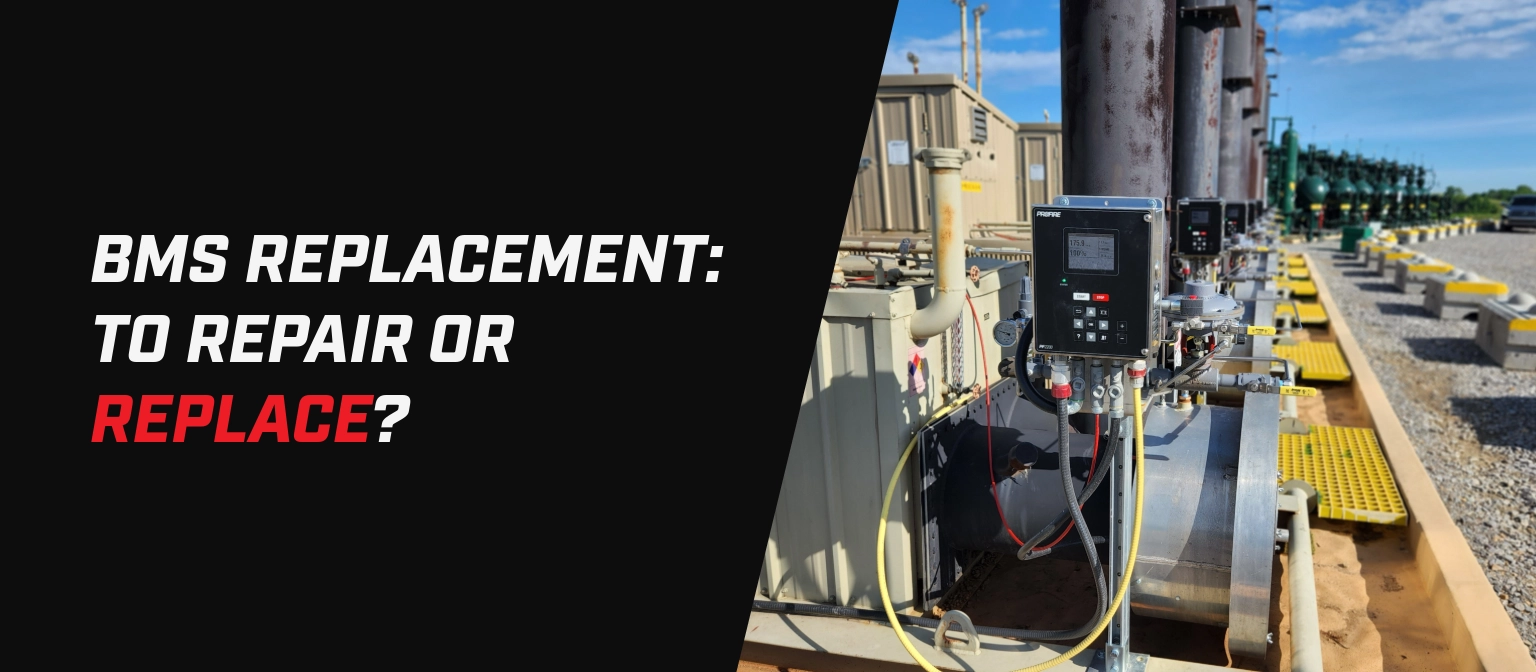
Burner Management System Replacement: When to Repair or Replace?
By Profire Team
June 30, 2026
Are you seeing more nuisance trips, downtime, or repeated restart cycles with your fired equipment? For many sites, the conversation starts in simpler terms: the heater keeps going out, the pilot won’t stay lit, or operators are relighting the same equipment more often than they should.
Most teams start evaluating their burner management system when the operational burden becomes too hard to ignore. Trips take longer to diagnose, shutdowns become harder to troubleshoot, and downtime starts to snowball. Parts availability, weak diagnostics, outdated burner controls, and shrinking support can turn a manageable maintenance issue into a larger uptime, safety, and standardization problem.
If recurring trips or growing support issues are affecting your uptime, it’s time to evaluate whether your current BMS is still defensible, or whether burner management system replacement is the lower-risk path forward.
When is Burner Management System Replacement Necessary?
In short, a burner management system replacement is needed when you can no longer defend the existing system with maintenance, troubleshooting, parts, diagnostics, lifecycle control, or code fit. Age isn’t the only deciding factor. What matters is whether the system still gives you a supportable, safety standards-aligned, low-friction way to start, monitor, trip, diagnose, and restart your fired equipment. If your system no longer meets those requirements, an industrial burner management system replacement is usually the right decision.
Try asking your team: could we confidently reinstall this same BMS, in this same application, under today’s requirements and operating expectations? If the answer is no, it’s time to consider a replacement.
How Does Supportability Influence BMS Replacement?
Supportability is the practical ability to keep your burner management system running safely, troubleshoot it effectively, and restore operation without excessive downtime or guesswork.
A supportable BMS usually has:
Available replacement parts
Access to technical support
Clear diagnostics and event history
Current documentation and lifecycle control
Operation that does not depend on one veteran technician’s tribal knowledge
If your team can’t maintain, troubleshoot, document, or get parts for the system with confidence, a burner management system replacement becomes easier to justify.
Should I Repair or Replace My Burner Management System (BMS)?
To understand whether it makes sense to repair or replace your BMS, use this simple distinction:
Choose repair if:
the root cause of your system troubles is isolated
the system is otherwise stable
the parts and support needed to restore operation are still available
Choose replace if:
your system troubles are no longer limited to one component or failure mode
the burden has become systemic rather than isolated
repair costs far outweigh burner management system replacement costs
A practical warning sign is when the same issue keeps returning after multiple service calls. If your team has spent months addressing symptoms without solving the root cause, or if recent repair costs are approaching the cost of a controls upgrade, the decision is no longer about one repair. It’s about whether the existing BMS is still practical to support.
When you weigh repair against replacement, compare the cost of the next repair with the cost of continuing to live with the system. If the issue is isolated, parts are available, and your team can troubleshoot the system with confidence, repair may still make sense.
Replacement becomes the stronger option when hidden costs keep stacking up: repeat nuisance trips, longer downtime, obsolete components, weak diagnostics, increased callouts, and more time spent working around the system instead of relying on it.
When the operating burden costs more than the replacement path, the decision becomes a risk-reduction decision.
What are the Operational Triggers for Burner Management System Replacement?
One of the major operational triggers for a burner management system replacement is increased downtime due to repeated nuisance trips, flame failures, slow or inconsistent restart sequences, or lockouts.
In the field, these issues often show up as persistent pilot problems. Operators may be relighting the pilot repeatedly, struggling with unstable light-off, or seeing the pilot drop out before the transition to main flame. Sometimes the issue is tied to maintenance, such as dirty flame-sensing components or flame arrestor maintenance. In other cases, the site may need better sequencing, diagnostics, or relight support to manage startup safely and consistently.
Modern burner controls can also provide more flexible startup sequencing, including the ability to manage timing between pilot establishment and main flame initiation where the application requires it. That kind of control can matter when the pilot lights, but the startup sequence still fails during transition.
Other operational triggers are often tied to the controls themselves. These can include:
Weak trip diagnostics
Limited first-out fault visibility
Missing interlock visibility during shutdowns
Modern controllers can improve visibility into these issues and strengthen the safety of your fired equipment.
Age-related triggers also matter, especially when the system depends on tribal knowledge. If one experienced operator is the only person who knows how to restart, troubleshoot, or work around the system, supportability becomes fragile. That risk grows when components become discontinued, service support shrinks, or documentation no longer matches field reality.
Process, fuel, or control changes can also push a legacy system beyond its original design basis. As safety standards evolve, older systems that were accepted under previous requirements may no longer be the most practical path to support or defend.
How Repeated Shutdowns and Service Issues Push Replacement
Repeated shutdowns increase downtime beyond the immediate fault. Each trip can add field labor, callouts, restart uncertainty, and production loss. When troubleshooting slows down, recovery takes longer and the case for replacement gets stronger.
Long lead times for parts, weak vendor support, and outdated controls can turn routine failures into larger outage events. That’s why frequent shutdowns should be treated as system-level problems, not just isolated component failures.
For example, if a pilot repeatedly lights but fails during the transition to main flame, the issue may not be limited to one component. It may involve draft establishment, burner setup, maintenance condition, sequencing, or the control system’s ability to manage the startup safely. When the same pattern keeps returning, the site needs to look beyond the immediate trip and evaluate whether the system is still supportable as a whole.
It’s also important to consider replacement when major site-level alterations are planned, because legacy arrangements may no longer be the most defensible path. Especially with new safety standards that may not allow legacy systems to be retrofitted into new builds.
What are the Lifecycle and Long-term Support Implications of a Burner Management System Replacement?
One of the biggest things a burner management system replacement accomplishes is resetting your system onto a more manageable lifecycle for operation, maintenance, modification, and eventual migration. Standards like IEC 61511 and ISA-84 explicitly treat safety systems, which burner management systems are, as lifecycle-managed assets, not install-and-forget equipment.
That’s why the real question is whether the BMS will remain practical to maintain, document, test, support, and modify over time. If that answer becomes less clear, replacement becomes easier to justify.
A modern system can reduce lifecycle friction by improving diagnostics, adding automation, standardizing maintenance tasks, and giving the site a clearer support path for future changes.
When evaluating a burner management system replacement decision, it’s important to consider both the cost of the next repair and the system’s remaining service life.
How Replacement Improves Maintainability and Supportability
A burner management system replacement can improve future maintainability and supportability in several ways:
access to supported hardware and a clearer product lifecycle path,
stronger diagnostics, first-out trip visibility, and operator help messages
faster troubleshooting and less downtime tied to fault isolation
easier documentation control for maintenance, testing, and future modifications
better predictability for spare parts, repairs, and future migration planning
A replacement can also reduce dependence on tribal knowledge. With better diagnostics, documentation, and operator guidance, teams get a more practical platform for maintenance, testing, training, and future modifications.
How to Plan for a Successful BMS Replacement
Treat a BMS replacement like a controlled process-safety change, not just a panel swap. Replacement projects can trigger requirements related to process safety information, operating procedures, training, management of change, and pre-startup safety review. OSHA’s PSM guidance supports that approach. It defines change as modifications to equipment, procedures, raw materials, and processing conditions other than replacement in kind, and says those changes need to be identified and reviewed before implementation.
Define the scope early: what’s being replaced, what’s staying, which interlocks and permissives are affected, and whether fuels, burner sequencing, or controls integration are changing. That reduces rework and helps separate replacement-in-kind from broader modifications.
A good replacement scope usually starts with a site walk. Before equipment is removed or quoted, the team should document component tags, end devices, wiring conditions, existing drawings, burner sequence, process requirements, and how the equipment operates within the larger site.
Responsibility boundaries should also be clear before commissioning. Define who owns field wiring, motor starters, contactors, end-device readiness, drawings, installation, testing, and startup support.
Outage planning should reflect project complexity. Smaller replacements may fit into a defined outage window, while larger or more integrated projects may be better scheduled during a planned shutdown or off-season period when the equipment is not required for service.
A successful burner management system replacement should improve more than function. It should make the system easier to support, troubleshoot, document, and maintain.
Steps to Ensure Continuity and Performance During a Burner Management System Replacement
Following these steps will help ensure that your replacement not only allows operations to continue, but also improves performance.
Document the current system before anything is removed
Confirm burner sequence, permissives, trips, alarms, and shutdown logic
Review integration points with PLC, SCADA, or DCS
Clarify responsibility boundaries for field wiring, motor starters, contactors, end devices, installation, testing, and commissioning support
Verify process safety information and management-of-change requirements
Plan the outage window around testing, not just installation
Complete pre-startup safety review before returning the system to service
Validate light-off sequence, interlocks, trip handling, and alarm response during commissioning
Update operating procedures, drawings, and turnover documents before handoff
Define commissioning spares, replacement parts availability, and post-startup support before the outage begins
Measure success by startup stability, troubleshooting clarity, and recovery time, not just by whether the system powers up
Frequently Asked Questions About Burner Management System Replacements
How do I know when to replace a burner management system?
A burner management system replacement is worth evaluating when the system is no longer practical to support, troubleshoot, or defend. Common signs include repeated nuisance trips, pilot instability, weak diagnostics, obsolete parts, shrinking vendor support, and restart issues that keep returning after service. If the same problems continue across multiple repair cycles, replacement may be the lower-risk path.
Is a burner management system replacement better than repairing old burner controls?
Burner management system replacement is usually better when the issue is systemic, not isolated. Repair can still make sense if the root cause is clear, parts are available, and the rest of the system remains stable. Replacement becomes easier to justify when repair costs stack up, downtime increases, documentation is outdated, or the controls no longer support safe, consistent operation.
What should be reviewed before replacing a BMS?
Before replacing a BMS, review the burner sequence, permissives, trips, alarms, shutdown logic, field devices, drawings, wiring, integration points, and process requirements. Teams should also confirm scope boundaries, outage timing, commissioning requirements, spare parts, and management-of-change needs before equipment is removed or returned to service.
How Do You Get Started with a Burner Management System Replacement?
Burner management system replacement becomes necessary when your current system is no longer practical to support, troubleshoot, or defend. If repeated trips, weak diagnostics, outdated controls, shrinking parts availability, and growing downtime are creating more burden than your team can justify, replacement is often the lower-risk path forward.
After a successful replacement, the first improvements are usually practical: the heater lights off more consistently, nuisance trips decrease, troubleshooting is clearer, and the system is easier for technicians to operate.
If your heater keeps going out, your team is repeatedly relighting the pilot, or the same BMS issues keep returning after service, Profire can help you evaluate whether repair or replacement is the right path forward.
Tell Us About Your Application
A Profire Specialist Will Contact You Within 24 Hours