NFPA 87 Explained: Fluid Heater Safety Requirements and What the 2024 Edition Changed
By Profire Team
August 20, 2026
Across North America, industries rely on fluid heaters to perform critical operations safely and efficiently. These systems are required in oil and gas, power generation, and manufacturing, and they carry real fire and explosion risk. That risk is the reason NFPA 87 exists.
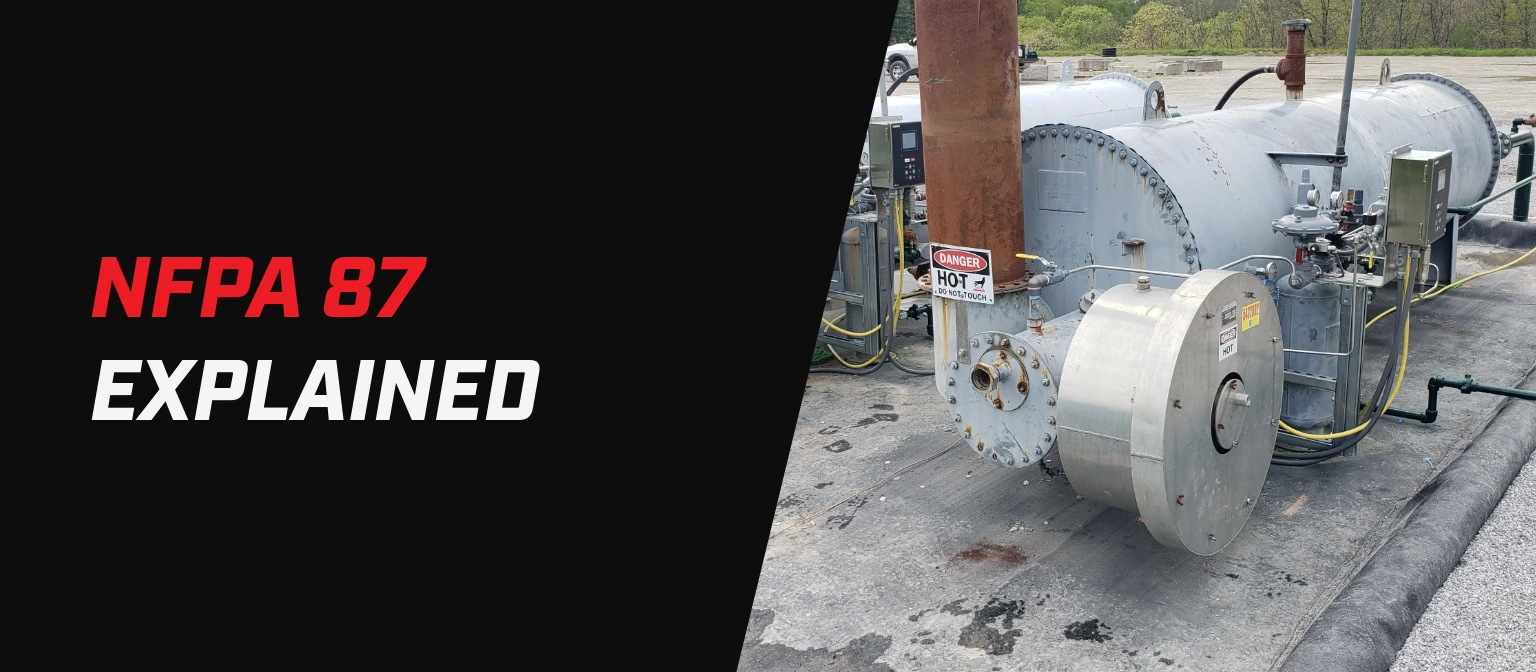
NFPA 87, Standard for Fluid Heaters, sets safety requirements for the design, installation, operation, and maintenance of fuel-fired and electric fluid heaters. Published by the National Fire Protection Association, it applies to thermal fluid heaters and process fluid heaters, sitting between NFPA 85 for boilers and NFPA 86 for ovens and furnaces. That gap is why it exists. NFPA 85 had deliberately excluded process heaters, and the committee behind NFPA 86 found them different enough from ovens to need their own document. NFPA 87 answered that, first as a recommended practice in 2011 and as an enforceable standard from 2018 onward.
What NFPA 87 covers and why it applies to your equipment
What changed in the 2024 edition
What those changes mean for daily operations
How to review your systems and prepare
Why does NFPA 87 matter?
Fluid heaters are essential in industries where uptime and safety go hand in hand. When these systems fail, the consequences can be severe, from equipment damage and costly downtime to safety hazards for personnel. NFPA 87 exists to reduce that risk by setting clear requirements for how thermal fluid heating systems are built, controlled, and maintained.
NFPA 87 is not law on its own. It becomes enforceable when a jurisdiction, an authority having jurisdiction (AHJ), an insurer, or a corporate standard adopts it. That’s increasingly common across North America, which is why it now shows up in project specifications and insurance reviews more often than it used to for NFPA 87 fluid heaters.
The NFPA 87 2024 edition raised the bar. It added requirements for safety interlocks, electrical systems, and fire protection, along with clearer definitions and design guidance. Those changes reflect current technology and current practice rather than incremental cleanup.
What changed in the 2024 edition of NFPA 87?
The NFPA 87 2024 edition tightened safety requirements, clarified older language, and reorganized parts of the document. These are the changes most likely to affect your equipment.
1. Stronger safety interlocks
Safety interlocks carry stricter reset requirements and expanded monitoring for thermal fluid heater safety:
Interlocks such as fluid excess temperature, low fluid flow, and stack temperature are treated as lockout conditions, so restarting takes deliberate operator action rather than an automatic recycle.
Relays and PLCs performing safety functions must be SIL 2 capable.
Electrical or mechanical bypassing of safety devices is prohibited, apart from specific conditions with time delays.
2. Expanded scope for smaller thermal liquid heaters
Earlier editions let thermal liquid heaters with fuel input ratings below 12,500,000 Btu/hr (3.7 MW) follow ASME CSD-1 or UL 795 in place of the heating system safety equipment requirements. The 2024 edition no longer recognizes ASME CSD-1 as an equivalent standard for small fluid heaters.
The 2024 edition tightened safety requirements, clarified older language, and reorganized parts of the document. These are the changes most likely to affect your equipment.
3. Electrical system updates
Relays can no longer take the place of electrical disconnects.
Disconnect devices must meet updated safety standards.
PLCs performing safety functions must be SIL 2 capable.
Safety interlock code must be stored in a dedicated safety memory, kept separate from general control logic.
4. A new chapter for fluid circuit safety, and a reorganized one for hardware
The 2024 edition adds one new chapter and reworks another:
Fluid Circuit Hardware Design is the reorganized version of the previous chapter on heaters, moved earlier in the document and refocused on the fluid circuit hardware itself.
Fluid Circuit Safety Logic and Interlock Application is the genuinely new chapter. It covers the control and safety equipment serving the fluid circuit, which the standard now treats as its own design concern.
5. Updated definitions and material specifications
Ambiguities in previous editions have been clarified, which makes it easier to select compliant materials and equipment. Quiescent bath heaters, which weren’t previously covered under the scope of NFPA 87, are now defined and addressed, and flange requirements were expanded to cover more of the specifications now available.
6. Fire protection enhancements
Hybrid fire extinguishing systems now need to comply with NFPA 770, adding another layer of protection in higher-risk installations.
What does this mean for your operations?
These updates change how fluid heater systems get designed and managed day to day.
Working through them offers clear advantages:
Improved safety. Updated interlocks and fire protection requirements reduce hazards and better protect personnel.
Higher reliability. Dedicated sensors and improved control logic help prevent failures and cut downtime.
Compliance confidence. Systems designed against the current edition hold up better under AHJ review, insurance inspection, and internal audit.
Easier support. Modernized electrical and hardware requirements simplify maintenance and support long-term performance.
How to prepare for NFPA 87 compliance
Meeting NFPA 87 starts with a clear plan. These steps help you close gaps without disrupting production.
1. Perform a gap analysis
Review your current systems against the edition your AHJ or insurer applies. Identify where safety interlocks, electrical components, or operating procedures fall short.
2. Update safety protocols
Revise manuals and operating procedures to reflect current interlock requirements, electrical disconnect rules, and fire protection standards.
3. Train your team
Build training that explains the requirements and their effect on daily operations, so staff understand how to operate and troubleshoot under the current rules.
4. Verify equipment compatibility
Check that heaters, control systems, and safety devices meet the updated specifications. Retrofit or upgrade equipment where they don’t.
5. Plan for integration
Create a phased schedule. Prioritize high-risk units first, then move to secondary systems to limit disruption.
Frequently Asked Questions About NFPA 87
What is NFPA 87?
NFPA 87, Standard for Fluid Heaters, is the National Fire Protection Association standard covering fuel-fired and electric fluid heaters. It sets requirements for location and construction, hardware design, safety equipment and interlocks, fire protection, and ongoing inspection and maintenance, with the goal of reducing fire and explosion risk.
Why was NFPA 87 created?
NFPA 87 was created because fluid heaters didn’t fit the standards that already existed. NFPA 85 excluded process heaters used in chemical and petroleum manufacturing, and the committee responsible for ovens and furnaces found that process heaters worked differently enough to need a separate document. Work started in 2006, and the first edition was published in 2011.
What is the difference between NFPA 86 and NFPA 87?
The difference between NFPA 86 and NFPA 87 is that NFPA 86 covers ovens and furnaces while NFPA 87 covers fluid heaters, meaning units that heat a thermal or process fluid that then circulates to a process. The two share definitions and much of the same safety philosophy, but applying the wrong one leaves a safety system designed against requirements that were never the right ones.
Is NFPA 87 mandatory?
NFPA 87 is not mandatory by default. NFPA 87 becomes enforceable when a jurisdiction adopts it, when an AHJ applies it, or when an insurer or corporate standard requires it. Many operators now treat it as the baseline for fluid heater safety regardless of local adoption.
What changed in the 2024 edition of NFPA 87?
The 2024 edition added stricter interlock and reset requirements, removed ASME CSD-1 as an equivalent standard for small fluid heaters, updated electrical disconnect and PLC requirements, added a new chapter on fluid circuit safety logic while reorganizing the hardware chapter, clarified definitions, and tied hybrid fire extinguishing systems to NFPA 770.
Does NFPA 87 require a burner management system?
NFPA 87 does require the safety functions a burner management system performs, including safe startup, flame supervision, interlock handling, and safe shutdown. On automated fired equipment, meeting those requirements in practice means using a burner management system rather than relying on operator attention.
How often should NFPA 87 safety interlocks be tested?
NFPA 87 calls for inspection, testing, and maintenance on a documented schedule with records retained. Annual testing of safety interlocks, safety shutoff valves, and flame safeguards is a common baseline. Follow the heater manufacturer’s instructions and the interval your AHJ or insurer requires.
Talk to Profire about NFPA 87 readiness
Understanding the requirements is the first step. Confirming your installed systems actually meet them is the harder part, and a single missed detail can lead to downtime, a failed inspection, or a safety risk that reaches well past the heater.