Where Profire Fits in the Downstream of Oil and Gas
By Profire Team
March 10, 2026
Optimizing Safety, Efficiency, and Sustainability in Refining and Distribution
The downstream oil and gas industry refines crude oil and natural gas into usable products and distributes them to global markets. From fuels like gasoline, diesel, and jet fuel to industrial feedstocks, lubricants, and asphalt, the downstream sector transforms raw hydrocarbons into the products we rely on every day.
Operating these facilities involves managing high-temperature thermal systems and multi-burner applications, which demand precision, strong safety measures, and strict environmental compliance. Even small inefficiencies or unplanned downtime can impact profitability, disrupt supply chains, and jeopardize regulatory compliance.
Profire provides trusted burner management and combustion control solutions to help operators improve safety, reliability, and efficiency. In this article, we explore Profire’s role in the downstream oil and gas sector, addressing operational challenges and delivering real-world value. We also focus on fired equipment common to downstream facilities and adjacent gas processing operations. In these settings, burner management systems (BMS) and combustion control systems are essential for ensuring safe, reliable operations.
How does Profire Support Your Downstream Oil & Gas Industry Operations?
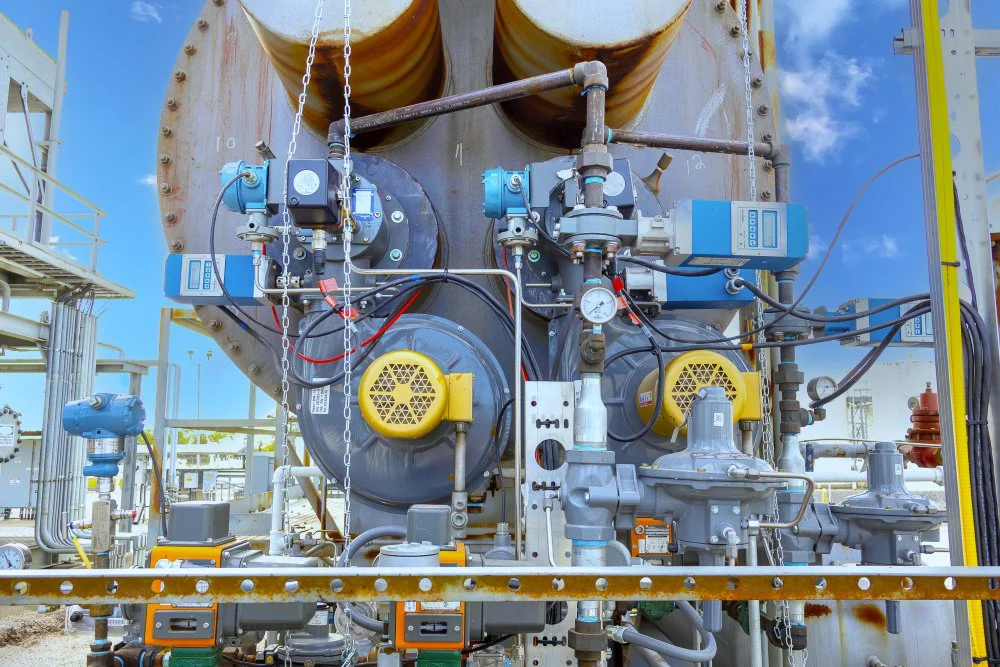
Profire specializes in Burner Management Systems (BMS) and Combustion Control Systems (CCS) designed for downstream thermal processes. These solutions focus on improving operational performance, safety, and environmental responsibility.
The PF3100 platform is engineered to handle both forced and natural draft, multi-burner, multi-pilot applications.
Our typical project scope is as follows and varies by site requirements:
Precise fuel-air ratio control with adaptive modulation for optimal combustion efficiency,
Seamless integration with SCADA and DCS platforms for centralized monitoring and control, AND
Meets the requirements of NFPA 85, 86, and 87, CSA B149.3, API 556, and IEC 61508 standards.
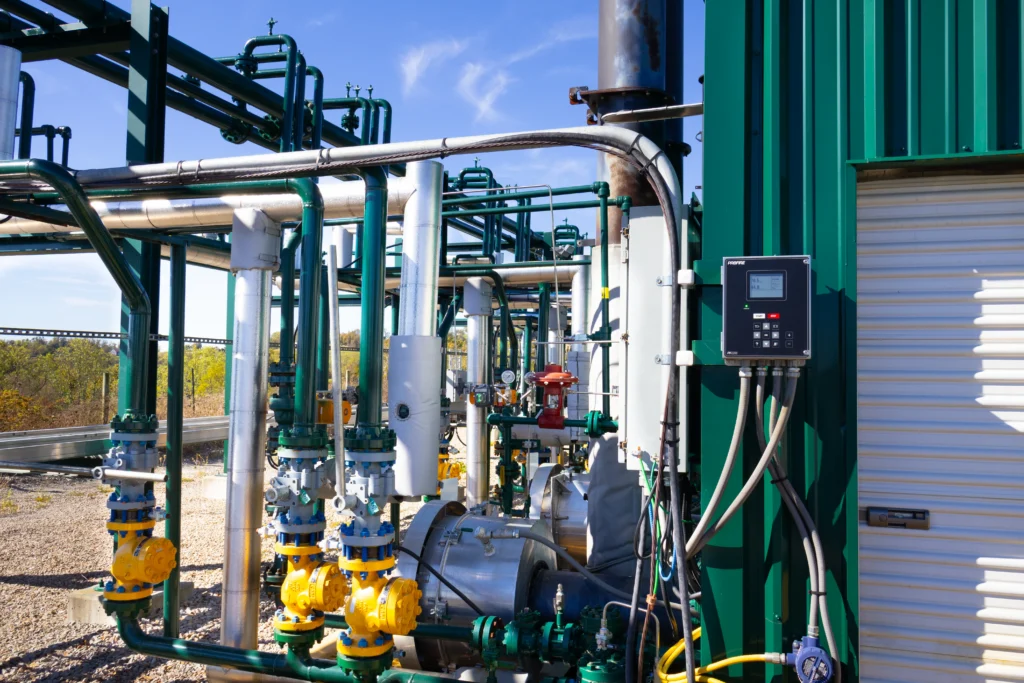
Certified Profire controllers enhance operational safety by managing burner ignition, operation, and shutdown sequences, reducing thermal shock, and supporting reliable startup performance. Combustion control strategies help minimize fuel consumption and support stable combustion and emissions performance across operating ranges. Pre-configured fuel trains deliver precise fuel with soft starts, double-block shutdowns, and actuated designs, simplifying installation, commissioning, and operator training.
Our preventive maintenance services provide predictive insights so operators can address potential issues before they disrupt operations, to extend equipment life, and reduce unplanned downtime.
What are the Tangible Benefits Profire Provides for Downstream Operators?
Downstream oil and gas operators using Profire solutions see clear, tangible benefits across downstream operations. Fuel efficiency improves through real-time burner modulation and optimized fuel-air ratios, often reducing consumption by 10–20% in systems. Predictive maintenance and reliable startup sequences minimize downtime and operational interruptions. Safety-rated systems support compliance with critical safety and environmental standards, while low-NOx performance support and emissions monitoring integration support ESG and regulatory goals.
Example: In a forced-draft TEG reboiler upgrade, a site reduced NOx from 60–70 ppm to below 20 ppm and achieved ~20% natural gas savings, while also improving troubleshooting speed through data access and first-out annunciation.
Integration with plant automation systems provides operators with actionable insights. This helps operators optimize processes, enhance system reliability, and maximize process throughput. Profire strengthens industrial safety and operational performance, so operators can focus on consistent, profitable production instead of reactive problem-solving.
How Does Profire Support Your ESG and Sustainability Goals?
As environmental regulations and corporate sustainability goals become more stringent, downstream operators in the oil and gas industry face growing pressure to reduce emissions and improve energy efficiency.
Profire contributes to these efforts by providing:
Support for emissions monitoring and reporting for NOx, CO, and other pollutants, including integration to plant monitoring systems where required.
Optimized combustion control to reduce fuel consumption and carbon footprint.
Safety-rated systems that protect personnel, equipment, and the environment.
These solutions combine operational efficiency with environmental responsibility, making Profire a strategic partner for both daily operations and long-term sustainability initiatives.
Understanding the Downstream Sector
The downstream oil and gas sector represents the final stage of the oil and gas industry’s value chain. Its responsibilities include refining crude oil into market-ready fuels and petrochemicals, as well as processing natural gas into liquefied natural gas (LNG) and natural gas liquids (NGLs) for industrial and residential use.
Downstream operations also play a crucial role in ensuring refined products are distributed efficiently to service stations, industrial facilities, and other end-users.
Fired equipment that Profire commonly supports with Burner Management Systems (BMS) and combustion control includes:
Process heaters and furnaces (direct-fired and convection)
Thermal oxidizers and flare gas oxidizers
Glycol (TEG) reboilers
Amine reboilers
These facilities depend on intricate thermal systems and combustion equipment, which require continuous real-time oversight. They also demand safety-rated controls and fuel management strategies that optimize operational efficiency while maintaining environmental compliance.
Critical components of these systems include SIL-capable architectures aligned with IEC 61508/61511 and burner-management practices following NFPA, API, CSA, and other regulatory standards. Additionally, the ability to adapt quickly to changes in feedstock quality or fluctuating demand is essential for ensuring reliable and efficient operations.
Key Operational Challenges in Downstream Oil and Gas Operations
Downstream facilities face multiple challenges that directly impact efficiency, safety, and profitability. Thermal systems and multi-burner operations must consistently perform at optimal levels, even when feedstock quality or process conditions fluctuate.
Safety regulations are stringent, and any deviation from standards can halt operations. Environmental compliance is a constant priority, requiring continuous monitoring and reduction of NOx, CO, and other emissions.
Unplanned downtime—whether driven by nuisance trips, unreliable startup/ignition sequences, flame instability, or delayed troubleshooting—can quickly erode throughput, increase operating costs, and elevate risk. Modernizing legacy burner controls or integrating them with new automation platforms without disrupting operations remains a complex task.
Navigating these challenges requires advanced automation and combustion control systems that improve performance, reduce risk, and maintain compliance.
The Role of Technology in Downstream Operations
Burner management and combustion control technology helps operators solve downstream challenges while improving efficiency, safety, and environmental performance. Advanced process automation helps enforce safety protocols, reduces human error, and supports continuous operation.
Real-time monitoring integrated to SCADA, DCS, and plant data systems gives operators actionable insights into burner performance, fuel efficiency, and emissions. Predictive diagnostics allow facilities to identify maintenance needs before failures occur, minimizing downtime and extending equipment life. Automated combustion control continuously adjusts fuel-air ratios, optimizing fuel consumption and reducing emissions.
By integrating these technologies, operators can maximize throughput, maintain regulatory compliance, and lower operational costs without sacrificing safety or performance.
The Future of the Downstream Operations with Profire
The downstream oil and gas sector continues to evolve due to changing market conditions, regulatory shifts, and advancing technology. Profire equips operators to meet these demands with:
SIL 2-capable smart controls aligned with IEC 61508, integrating with plant-wide automation platforms.
Predictive, data-driven diagnostics that enable proactive maintenance and operational insights.
Combustion control strategies that support low-NOx performance and reduce environmental impact.
Advanced integration with SCADA/DCS systems for smooth modernization without disrupting production.
These innovations help operators maintain reliable, efficient, and compliant operations, even as the complexity of downstream oil and gas processes increases.
Why is Downstream Oil and Gas Important?
The downstream oil and gas sector is critical in transforming raw hydrocarbons into fuels and finished products that power transportation, industry, and daily life. Our solutions enhance these vital operations by significantly improving reliability, efficiency, and compliance.
With our advanced systems, operators gain safer, more precise thermal process management, leading to substantial cost savings and the confidence that they are meeting stringent environmental and safety regulations. This ensures that operations run smoothly and effectively across North America, with applicability across other global markets.
Ready to Optimize Your Downstream Oil and Gas Operations?
Partnering with Profire ensures your thermal heating processes are safe, efficient, and compliant. By integrating advanced BMS and CCS solutions into your operations, you can achieve consistent, profitable production while meeting regulatory and sustainability goals in the downstream of the oil and gas industry.
Frequently Asked Questions About Profire and Downstream Oil and Gas
What’s the difference between a Burner Management System (BMS) and combustion control?
The difference between a burner management system (BMS) and combustion control lies in functionality. A BMS ensures safety by managing permissives, purge, ignition, flame supervision, and shutdown. Combustion control (or Combustion Control System, CCS) focuses on efficient operation by controlling fuel and air flow. Most applications in the downstream need both: BMS for safety and CCS for performance and emissions.
Which fired equipment typically needs a BMS and combustion control?
The fired equipment that typically needs a BMS and combustion control are process heaters & furnaces, thermal oxidizers & flare oxidizers, and amine & glycol reboilers.
Can Profire support retrofits without disrupting production?
Yes, Profire supports retrofits with minimal production downtime. Many projects we support involve modernizing legacy burner controls while avoiding uneccesary downtime.
What is the downstream sector in oil and gas?
The downstream sector in oil and gas refers to refining crude oil, processing natural gas, and distributing petroleum products like gasoline, diesel, and jet fuel.
How does Profire support downstream operations?
Profire supports downstream operations by providing burner management systems, combustion control solutions to improve safety & efficiency, reduce emissions, and support compliance.
Why is safety important in downstream oil and gas?
Safety is important in downstream oil and gas by supporting reliable operations. It also supports regulatory compliance and helps protect people, equipment, and the environment during refining and distribution.
How does a Profire Controller improve fuel efficiency?
A Profire controller improves fuel efficiency by continuously modulating burners, optimizing fuel-air ratios, and preventing unnecessary fuel consumption during startup and operation.
Can Profire systems integrate with existing automation platforms?
Yes Profire systems can integrate with existing automation platforms. PF3100 and related systems are designed for seamless integration with SCADA and DCS platforms, allowing for centralized monitoring and control.