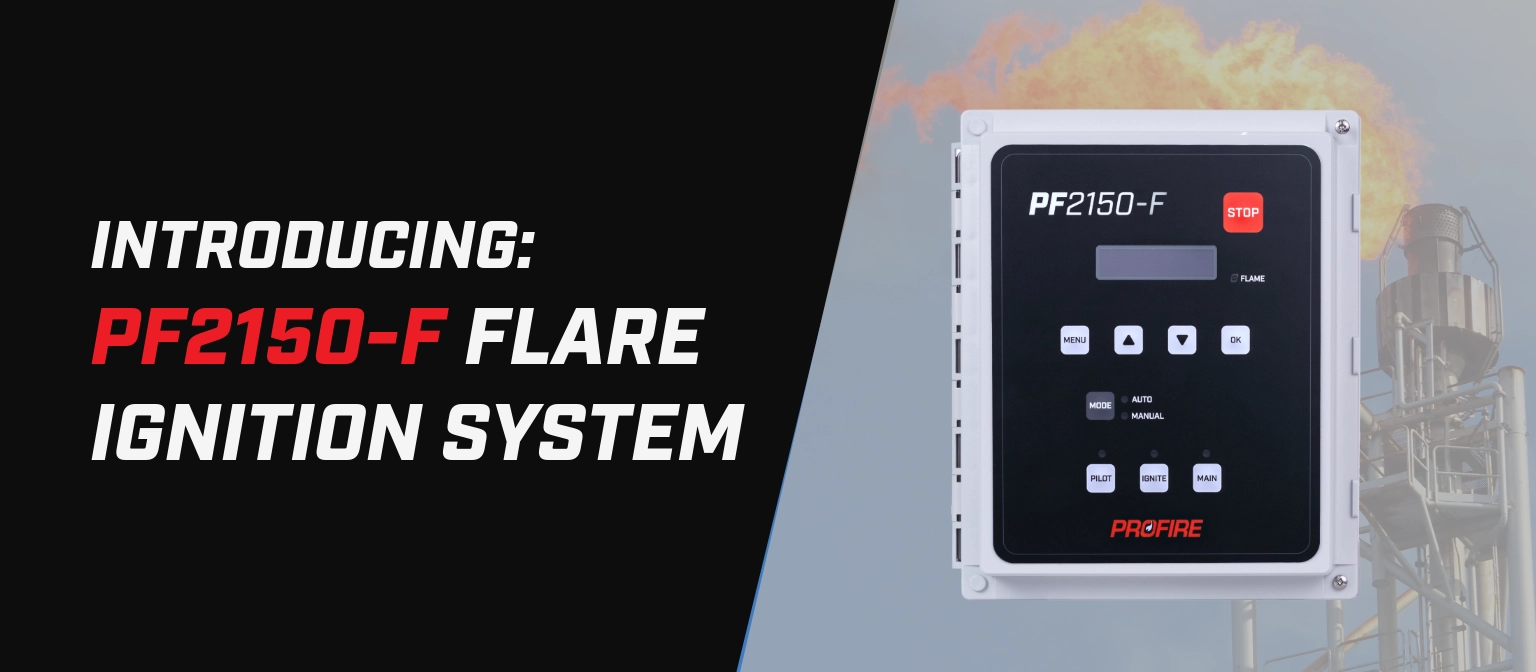
PF2150-F Flare Ignition System: Reliable Ignition for Single-Pilot Flare Applications
By Profire Team
May 22, 2026
Your flare ignition system may still be running, but that doesn’t always mean it’s easy to support. As equipment ages, the pressure often shows up in day-to-day work: longer troubleshooting, more maintenance planning, less event visibility, and more uncertainty when a pilot drops out or a nuisance shutdown interrupts operation.
The PF2150-F Flare Ignition System (FIS) gives operators reliable ignition control for single-pilot, single-flare applications, without adding complexity your field team doesn’t need. For the current PF2100F user base, the PF2150-F is our recommended upgrade path when the timing is right. For teams using older competitor systems, relying on manual ignition practices, or operating simple flare applications that need a dedicated FIS, the PF2150-F is a practical way to improve flare reliability, diagnostics, and long-term supportability.
The PF2150-F keeps the operation familiar while improving the areas that matter most in the field:
consistent ignition,
clearer troubleshooting,
better event visibility,
more confidence during audits, maintenance planning, and future upgrades.
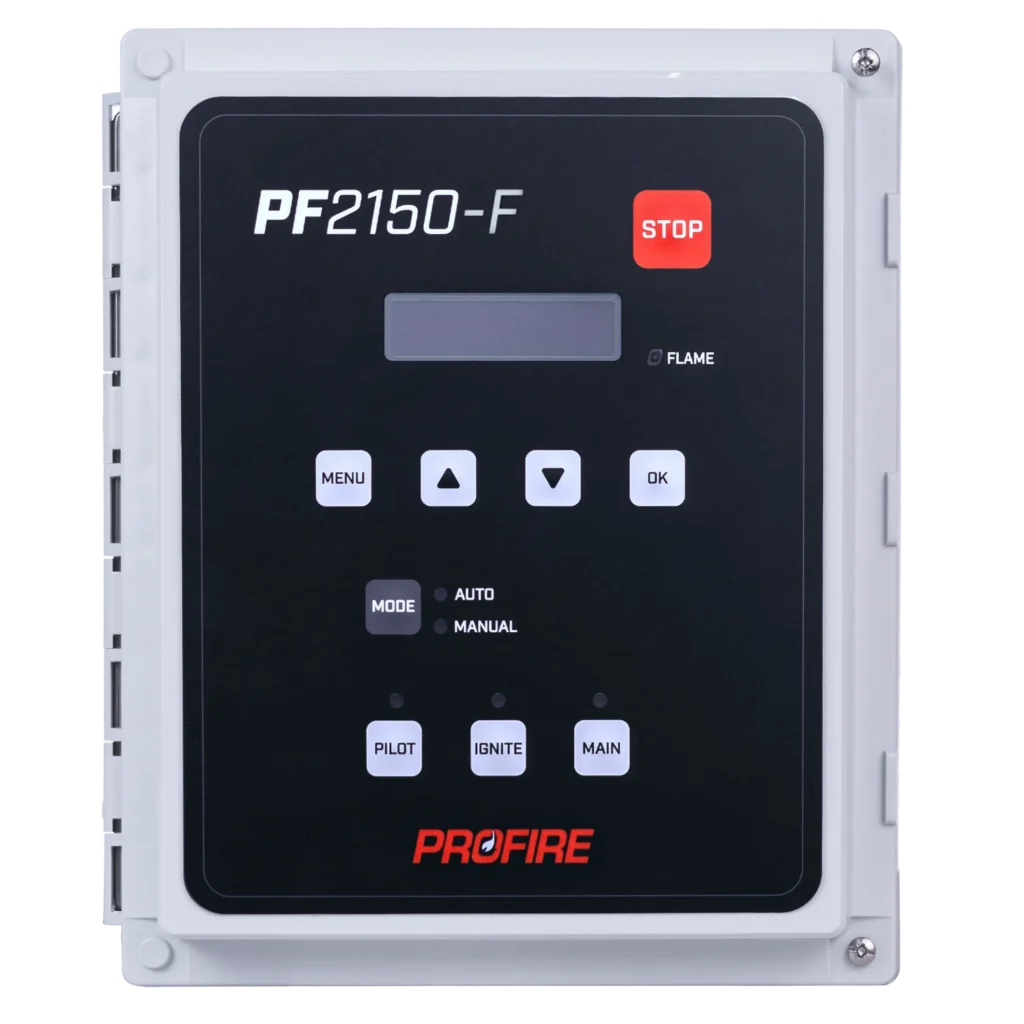
The PF2150-F Flare Ignition System is designed for single-pilot, single-flare applications that need reliable ignition control without added field complexity.
For existing PF2100F users, the PF2150-F is Profire’s recommended upgrade path when you’re ready to modernize, while preserving a familiar operating approach.
The system helps improve flare reliability through automatic relight, improved flame detection, programmable setpoints, and clearer event visibility.
Timestamped event logging and RS485 Modbus communication give operations and engineering teams better information for troubleshooting, maintenance planning, and auditreadiness.
The PF2150-F is a practical fit for teams standardizing flare ignition systems, retrofittingan older FIS, or preparing for future supportability needs.
Why Operators Are Evaluating Flare Ignition Upgrades
Many PF2100Fsystems are still operating reliably in the field, and many will continue to do so for some time. But as flare assets age, it’s worth understanding your upgrade options before supportability becomes a day-to-day problem. Over time, replacement planning can become more complicated as parts availability, repair timing, maintenance windows, site standards, and compliance expectations change. Maintenance teams may also need clearer event history to troubleshoot flame events faster and reduce downtime risk. Planning ahead gives your team more control over the timing, scope, and impact of a future upgrade.
That’s often when the question changes from, “Is the system still running?” to, “Is this still the easiest system to support?”
Operations teams are usually looking for fewer nuisance shutdowns, faster recovery, and less time spent tracing flame events. Engineering teams need confidence that the system fits the application, supports current certification expectations, integrates cleanly, and won’t create avoidable installation, commissioning, or lifecycle burden.
The PF2150-F supports both your operators and engineers’ priorities by upgrading your simple flare ignition control without changing operator workflow, adding unnecessary complexity, or requiring large-scale retraining.
FIND OUT ABOUT YOUR PF2100F UPGRADE OPTIONSGET IN TOUCH
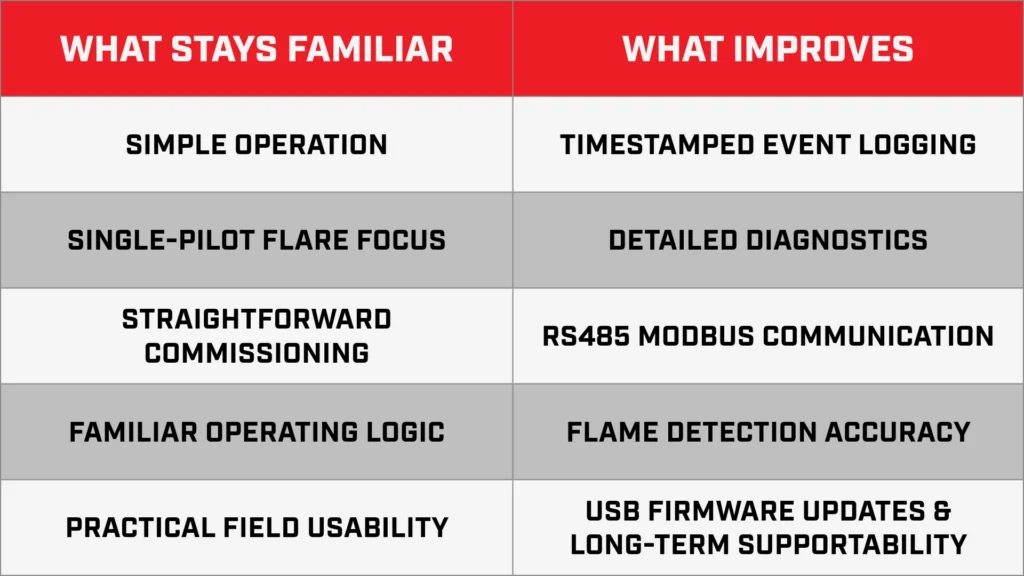
What Stays Familiar, and What Improves
For PF2100F users, the PF2150-F will feel like a planned step forward, not a forced reset. It keeps the simple flare focus and straightforward operating philosophy, while giving teams clearer visibility into what’s happening in the field.
That balance matters. A flare ignition upgrade shouldn’t create a training problem, slow down commissioning, or add controls complexity your team doesn’t need. The PF2150-F helps make simple flare applications easier to operate, troubleshoot, maintain, and support over time.
Built to Reduce Shutdowns and Speed Up Troubleshooting
The PF2150-F offers more than modern functionality; its value comes from what those capabilities help your team do during real operating conditions.
When operators need to understand why a flame event occurred, timestamped event logging provides clearer event history. That helps technicians troubleshoot faster, reduce guesswork, improve maintenance visibility, and support audit readiness with better information.
When nuisance shutdowns or inconsistent ignition create downtime risk, improved flame detection, programmable ignition and shutdown setpoints, and automatic relight help support more consistent flare operation. Operators get better control over ignition sequences and more tools to reduce avoidable interruptions.
When truck rolls and manual intervention add field burden, reliable pilot monitoring and automated ignition improve support for High Energy Ignition (HEI) Systems, controlled spark intervals, and pilot and main solenoid control. That means less time babysitting the system and more confidence in day-to-day flare operation.
When teams need better visibility from the control room or a connected system, RS485 Modbus communication supports remote monitoring and integration with broader site controls, without turning a simple flare application into an overbuilt controls project.
In practical terms, these capabilities help teams:
reduce nuisance shutdowns,
improve flare reliability,
troubleshoot flame events faster,
give operations and engineering teams clearer information when your flare system needs attention.
Designed for Simple Flare Applications
The PF2150-F ispurpose-built for single-pilot, single-flare applications where reliable ignition, flame monitoring, and automatic relight are essential. Typical applications include production flares, pit flares, sewage digesters, coke ovens, coal gasification, blast furnaces, and other simple flaring applications that need straightforward ignition control.
It’s a strong fit when teams are planning a retrofit, standardizing flare ignition systems across sites, replacing an older FIS, or preparing for future maintenance and supportability needs.
For operators, it helps keep the flare online and easier to troubleshoot. For engineers, it provides a supportable platform designed to meet current U.S. and Canadian certification expectations.
Upgrading a flare ignition system can raise a few questions:
Will this be harder to operate?
Will the team need retraining?
Will our technicians be unable to support the new system in the field?
Will installation or commissioning take longer than expected?
Will migration create downtime risk?
When it comes to the PF2150-F, the answer is simple: No.
The PF2150-F was developed with those concerns in mind. It preserves a familiar operating approach for PF2100F users while giving teams stronger diagnostics, improved communication options, and better tools for troubleshooting and maintenance visibility. That helps reduce friction during adoption and gives field teams clearer information after startup.
For teams that aren’t using a PF2100F today, the same value still applies. The PF2150-F provides a dedicated, field-practical FIS for simple flare applications, where the priority is reliable ignition control without unnecessary complexity.
FAQ: PF2150-F Flare Ignition System
Do I have to replace my PF2100F?
Not necessarily. Many PF2100F systems remain in reliable operation today. However, the PF2150-F is Profire’s recommended upgrade path for operators who are planning a retrofit, standardizing sites, preparing for future supportability needs, or looking for improved diagnostics and reliability.
What improvements does the PF2150-F offer compared to the PF2100F?
The PF2150-F preserves familiar operation while adding modern diagnostic and communication capabilities, including timestamped event logging, RS485 Modbus communication, improved flame detection, automatic relight, and easier firmware updates. See a full breakdown HERE.
Is the PF2150-F easy for existing PF2100F users to move to?
Yes! The PF2150-F maintains a familiar operating philosophy, which helps reduce retraining needs and supports smoother adoption in the field.
How does the PF2150-F improve flare reliability?
The PF2150-F helps reduce nuisance shutdowns and improve ignition consistency through automatic relight, improved flame detection, programmable setpoints, and better event visibility for troubleshooting.
What type of flare application is the PF2150-F designed for?
The PF2150-F is designed for single-pilot, single-flare applications, including production flares, pit flares, and other simple flaring applications that need reliable ignition control, flame monitoring, and straightforward operation.
Modernize Flare Ignition Without Overcomplicating the Field
The PF2150-F provides operators and engineers with a practical way to improve flare reliability, diagnostics, and supportability while keeping operations familiar. Whether you’re planning a PF2100F upgrade or evaluating a new FIS for a simple flare application, Profire can help determine fit, plan the transition, and support your team through the next steps.
Talk to a Profire Flare Ignition Specialist to review your application and determine whether the PF2150-F is the right fit for your operation.