Dual Pilot Forced Draft Flare
Adding dual-pilot ignition automation and operating record visibility to a forced-draft flare system. Tell us more about your project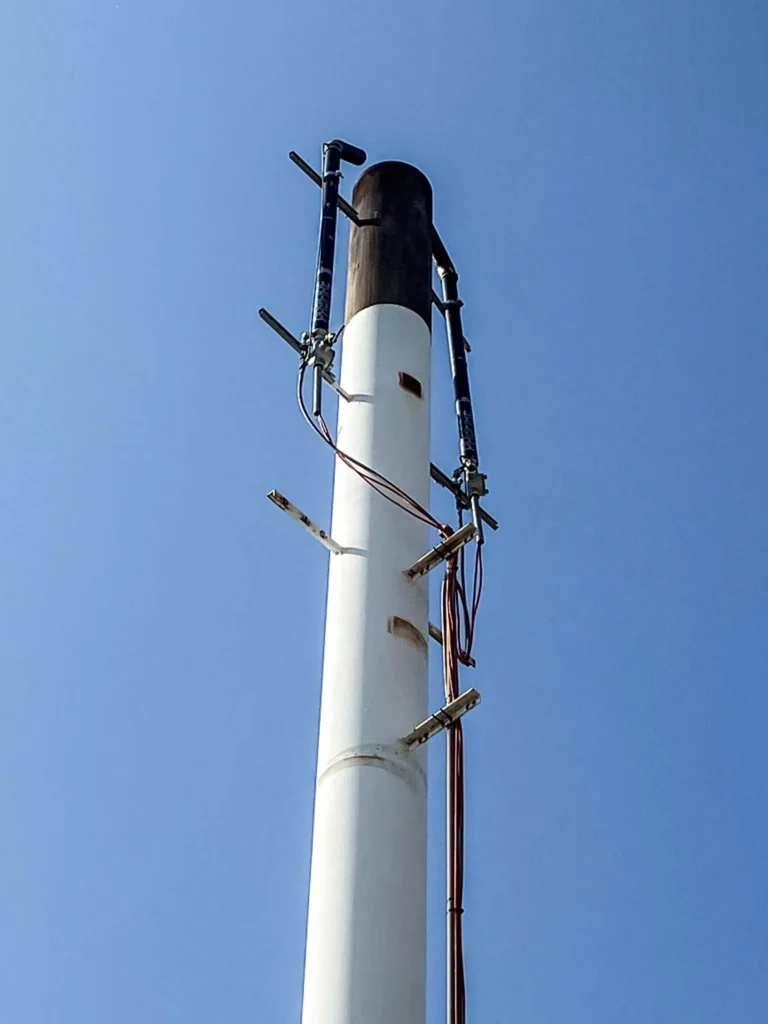
Project Highlights
- Forced-draft flare at a railcar cleaning facility in Hockley, Texas
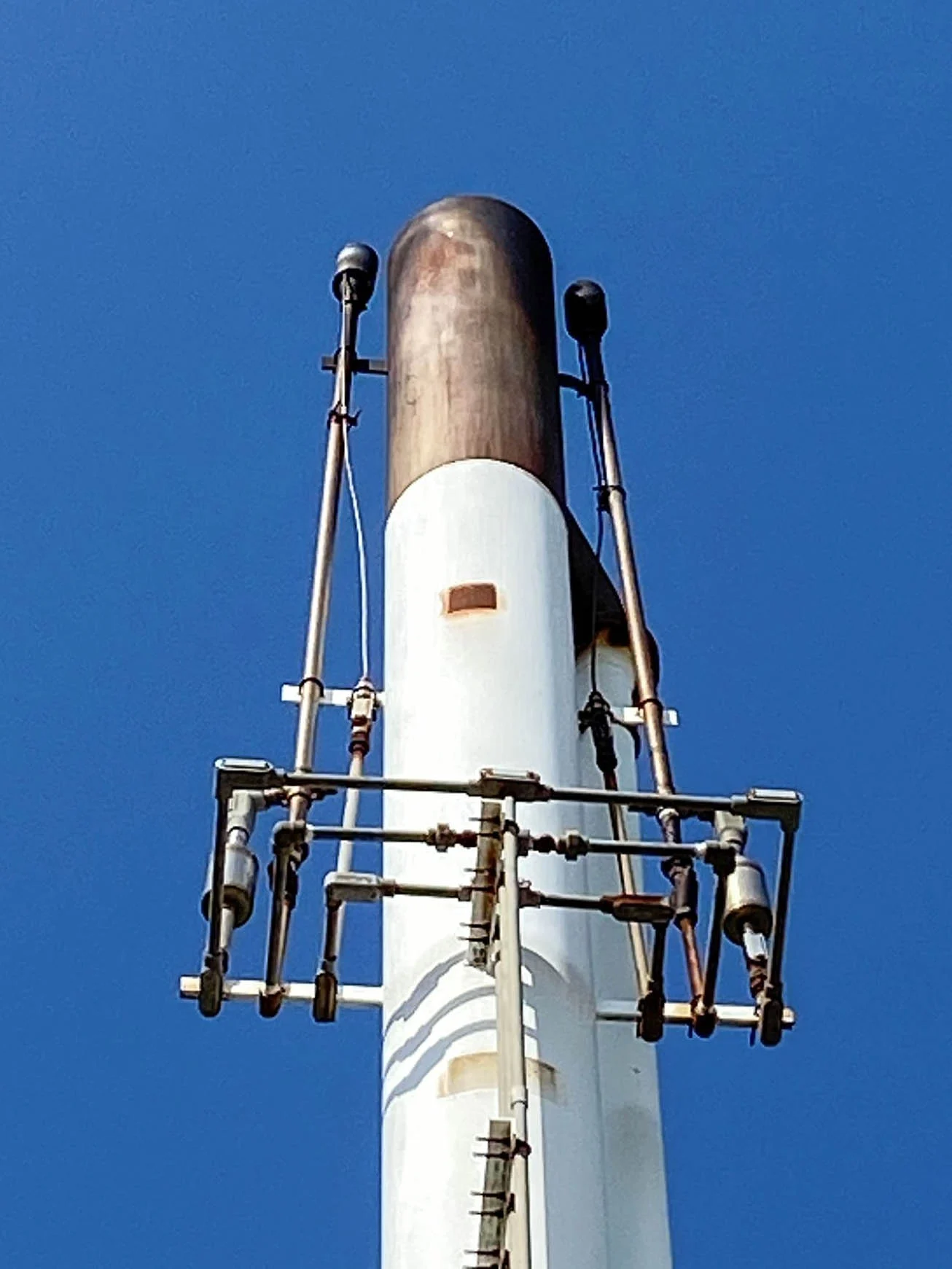
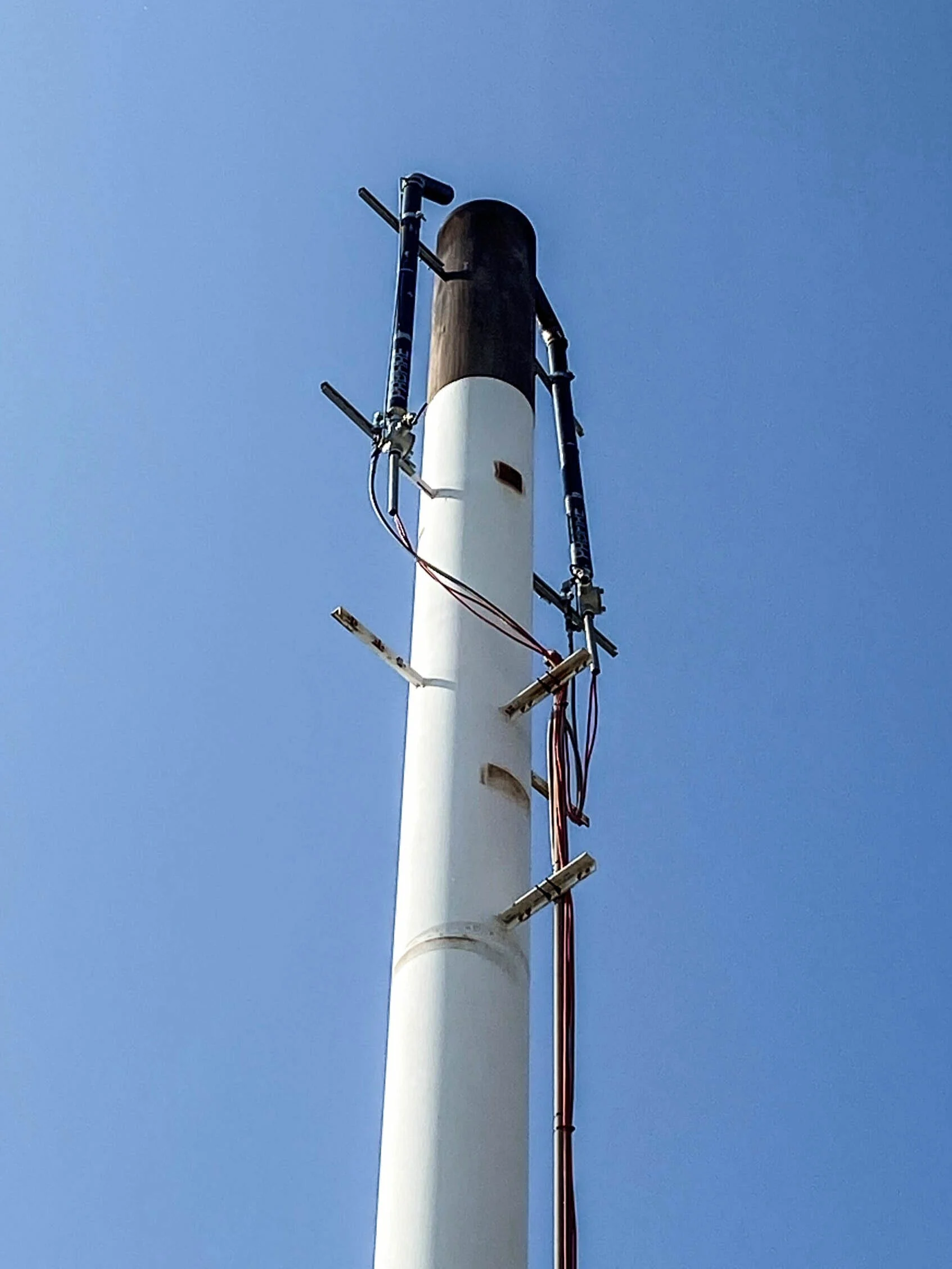
- Two FSI flare pilots mounted on opposite sides of the tip for redundant ignition
- One PF2200-SB controller managing both pilots
- Automatic three-attempt re-light sequence replacing spark-box lighting by hand
- Fuel train modified with solenoid valves for start-from-the-panel operation
- Waste gas pressure monitoring to record when the flare was in service
- On-board data logging for quarterly air permit reporting
- Wireless data link to a control room roughly 2,500 feet from the stack
The Problem
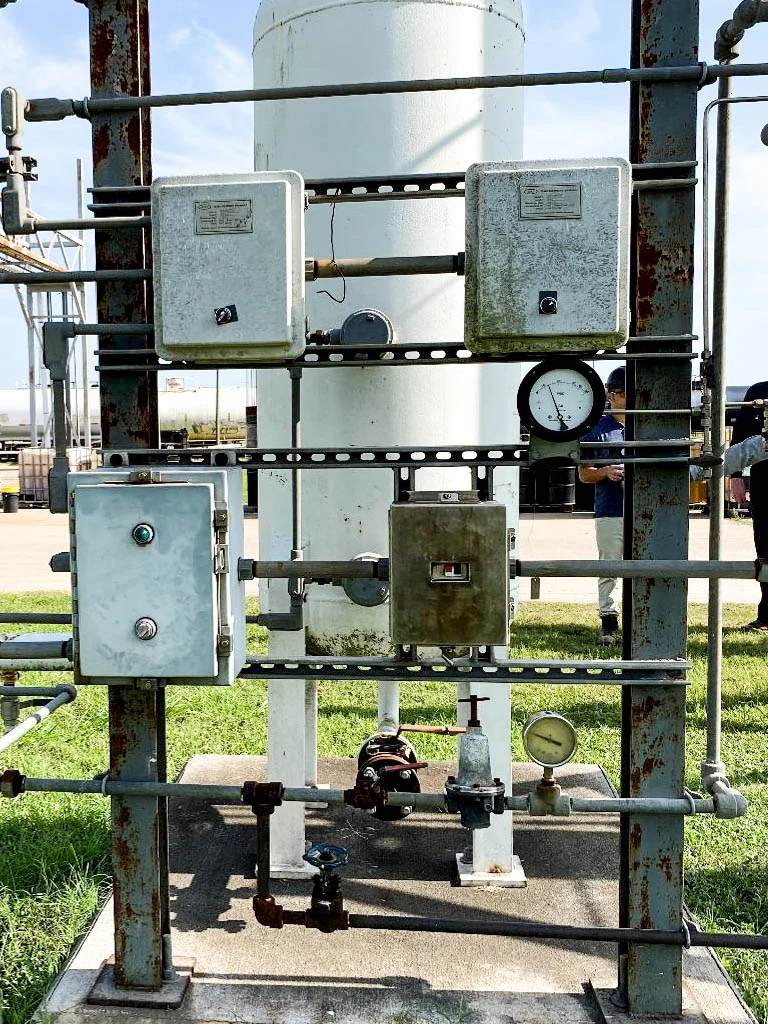
A railcar cleaning facility in Hockley, Texas runs a dual pilot forced draft flare to burn waste gas from its cleaning operation. The flare sits close to a residential area, and lighting it was hands-on work. An operator opened the pilot gas valve, pressed spark on a spark box until the pilot caught, then opened a second valve by hand to let waste gas flow to the stack.
The pilots were built for an earlier generation of the site and had a hard time in Gulf Coast weather. One had not lit in years. The other ran from time to time and dropped out whenever a storm moved through. The stack sent no status back to anyone, so a pilot could be out for a while before someone glanced across the yard and noticed a dark tip. Getting it relit meant walking out to the flare, and at times putting a technician on a man lift to light the pilot 40 feet up.
That uncertainty carried a reporting cost. The facility’s air permit required it to document when the flare was operating and report that record every quarter. Without operating data, the team had no way to show an inspector that the flare ran continuously, and no way to account for the stretches when a pilot was out. The control room sat roughly 2,500 feet away across railway track and stored railcars, with no practical route for new communication lines to the flare.
Sound Familiar? Let's TalkBefore Profire
The Profire Solution
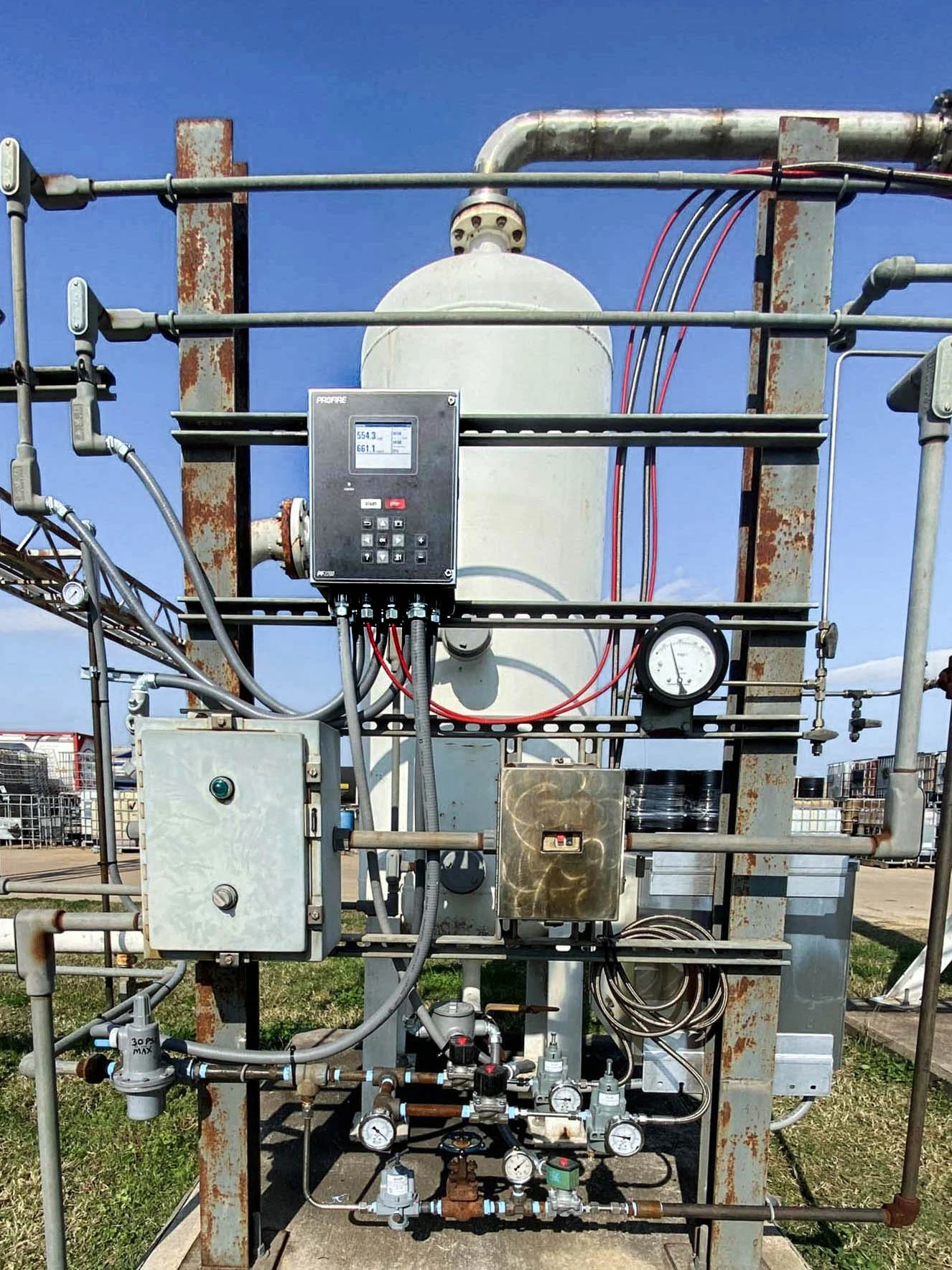
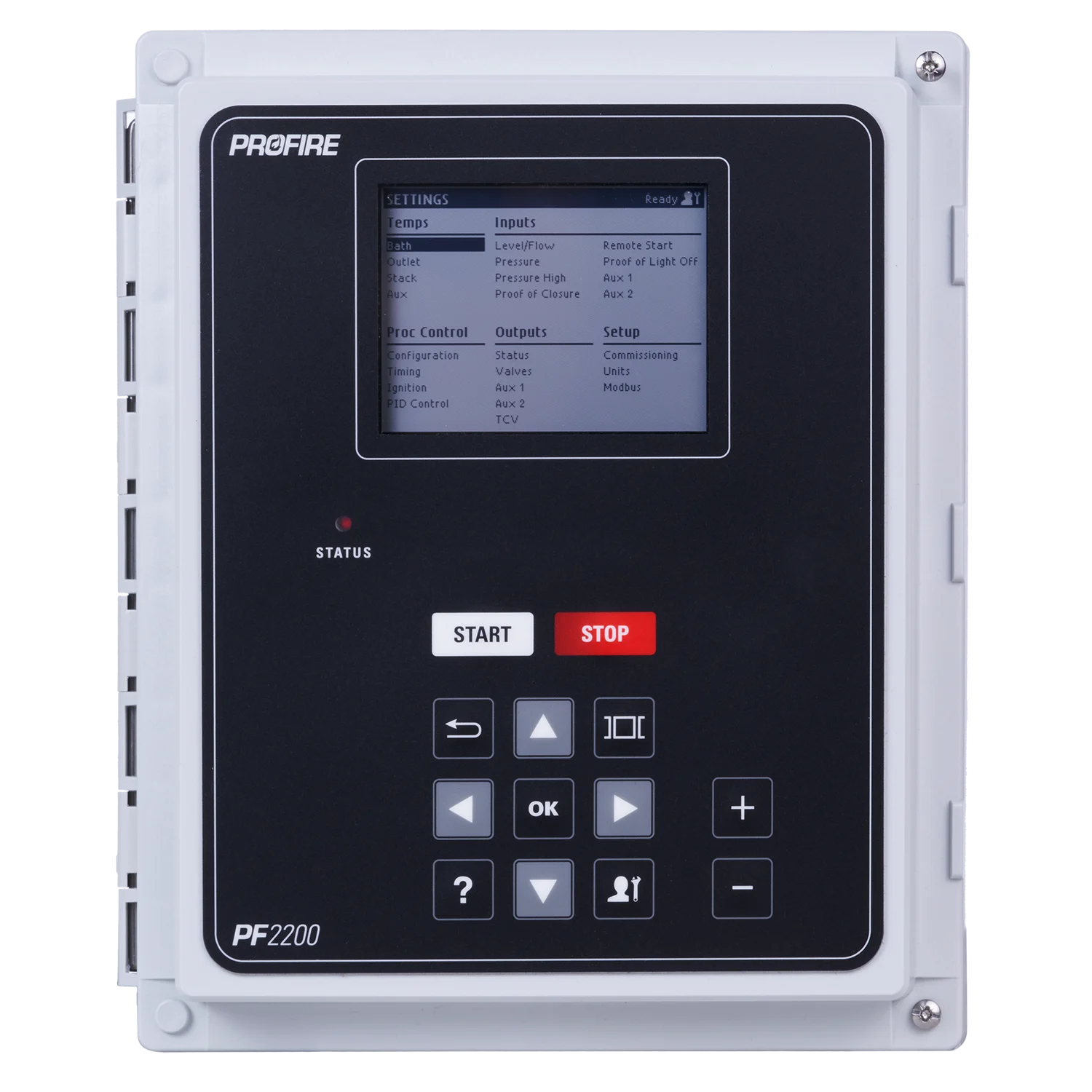
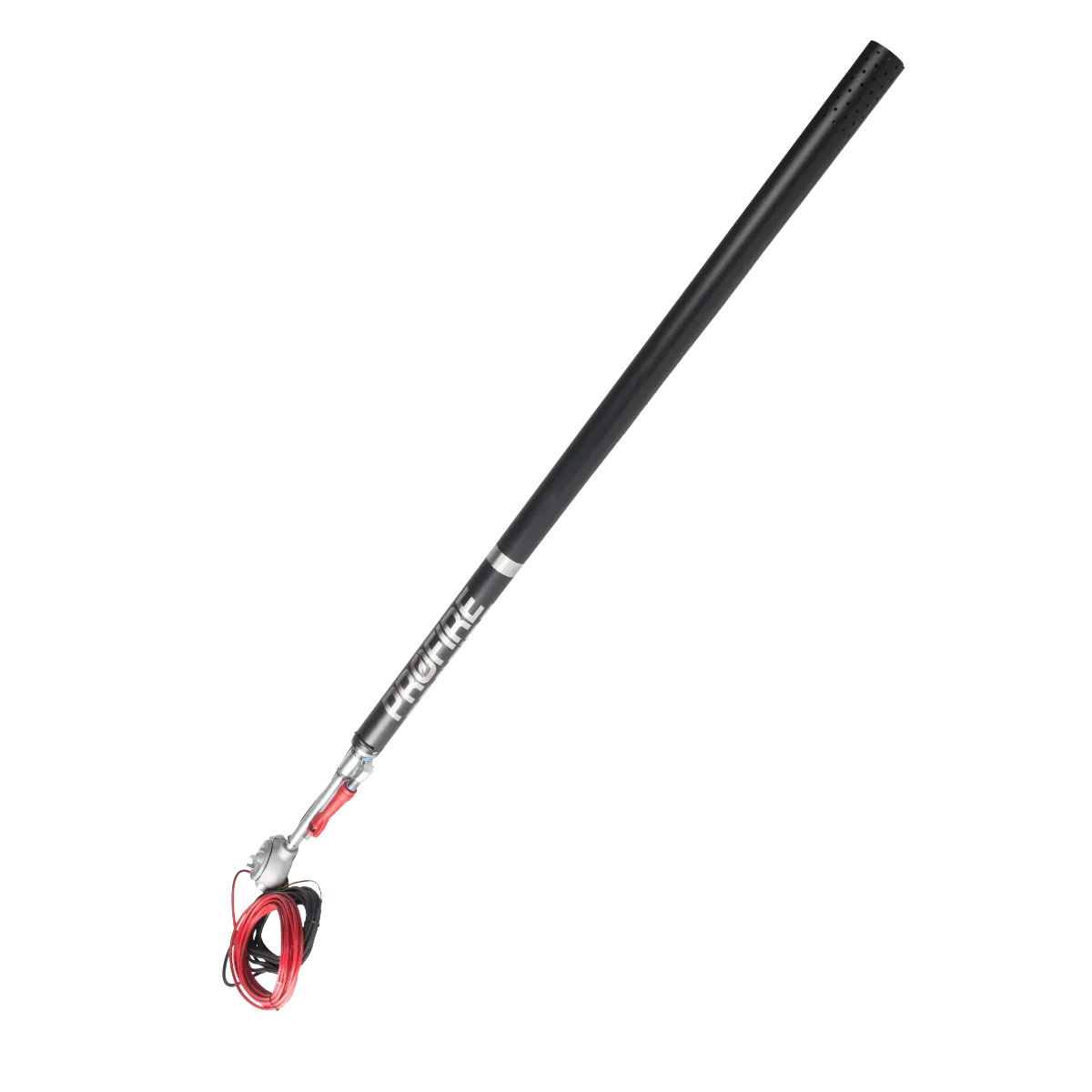
Profire installed two FSI flare pilots and a single PF2200-SB burner management controller to run both of them. The pilots went on opposite sides of the flare tip, so a south wind that pushed one flame out left the other burning and waste gas reaching the tip still had an ignition source. The customer wanted one controller for both pilots rather than a separate controller at each one, and the PF2200-SB supports dual pilot operation from a single panel.
Flame sensing took the most work on this application. The pilots sit about 40 feet up with another 20 feet of horizontal run back to the control enclosure, and the system uses ionization sensing across that distance. Ionization performs best in enclosed, controlled environments, so our field team worked through signal and setup issues on site before the system lined out. Angled pilot nozzles with gas injected at the back end helped hold the flame in wind and were a large part of why the arrangement held up. Typically, thermocouples would perform this flame sensing, but the customer wanted to maintain ionization sensing for the flare.
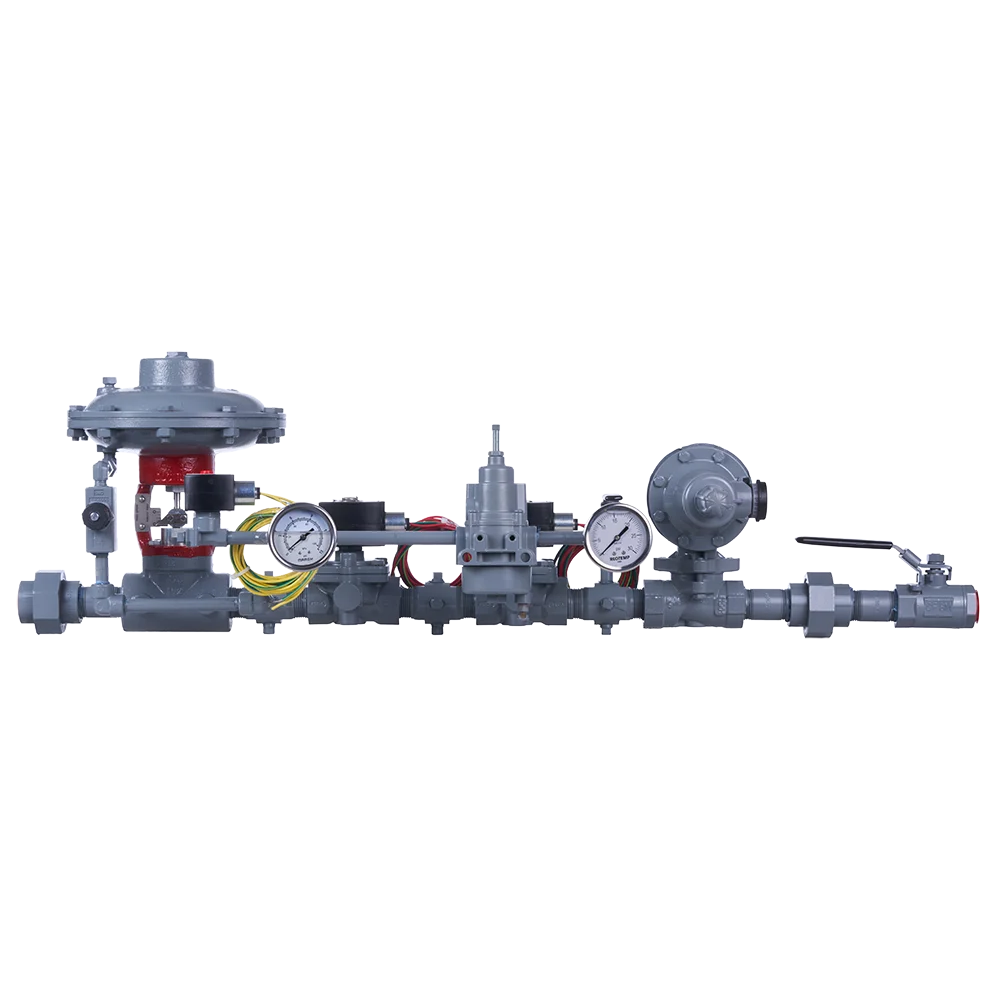
Automating the light-off took modifications to the fuel train. Solenoid valves went in on the pilot and waste gas lines, so the sequence an operator used to run by hand now runs from the controller. Profire also installed a pressure transmitter on the waste gas line into the flare. A burner management system can see pilot status but not whether the main flare is burning, so high and low pressure setpoints on that line give the facility a record of when waste gas was actually present and the flare was in service.
New communication lines to the control room weren’t an option, so the data came back wirelessly instead. Operators could check pilot status and flare temperatures from the control room rather than walking the yard, and the controller’s data logging card held the operating history behind the quarterly reports.
Key elements included:
- Dual FSI pilots: Redundant ignition, so one pilot keeps burning when wind or rain takes the other out.
- Single-controller dual pilot management: One PF2200-SB runs both pilots, which keeps the panel and the field wiring straightforward.
- Automatic re-light: The controller makes three re-light attempts on its own instead of waiting for someone to notice a dark tip.
- Fuel train automation: Solenoid valves on the pilot and waste gas lines turned a multi-step manual light-off into a single start command.
- Waste gas pressure monitoring: High and low setpoints record when the flare was in service, which is what the quarterly permit report needs.
- On-board data logging: Operating history stays on the controller and can be pulled into a report for inspectors.
The Results:
Operators stopped lighting the flare by hand. Start-up is now turning on the forced-draft blower at its manual switch, which stayed outside Profire’s scope, then pressing start on the panel. One operator couldn’t believe all that previous manual work was now mostly automated. Technicians also stopped riding the man lift to chase a pilot that dropped overnight, since the controller retries on its own and reports what it finds.
The facility also got the operating record its air permit called for. With pilot status, flare temperatures, and waste gas pressure logged, the team could trend the data and produce reports showing the flare ran continuously instead of reconstructing it after the fact. The system has run since commissioning with no reported controller or fuel train issues. The recurring work has been cleaning carbon off the pilot nozzles, which Profire walked the site through on a maintenance visit so the plant’s own crew could take it over.
Get a Free QuoteAfter Profire
Ready to Optimize your Equipment?
Let Profire help with your Safety, Reliability, and ESG Initiatives
Get a Free QuoteRecent Projects
Details
See Details
Despite operating significant upstream positions throughout North and South Texas, several of a Oil & Gas…
Details
See Details
Western Midstream operates a natural gas processing plant near Denver, Colorado that had been running for…
Details
See Details
A leading Oil & Gas producer operated 148 aging dual-tube horizontal heater treaters running on pneumatic…