Pre-Configured Burner Management Control: Where the PF3100 QP Series Fits
By Profire Team
November 5, 2026
Why would you choose a pre-configured burner management control panel over an engineered-to-order solution that’s tailored to your application? Convenience.
Engineered-to-order custom panels can take weeks in design time before a system is shipped to your site and installed. With the new PF3100-QP Control Panel series you’re scoping a solution before the PO is even issued. And that’s what we designed them for: quick procurement.
What you’re receiving with the PF3100-QP is a solution that packages the full PF3100 platform for both single and dual-burner fired equipment, is pre-configured to your application, pre-wired and ready to install, and available to order today.
Most single and dual-burner burner management and combustion control requirements are repetitive enough that the design work has already been done hundreds of times over. A line heater in one field looks a lot like the next, and the control philosophy behind both is the same. The PF3100-QP Control Panel Series is built around that repetition.
Engineered-to-order panels still have a place. Some appliances need a design built around them, and the right answer for those projects is a custom panel on the same PF3100 platform.
This article covers:
What the PF3100 QP Series includes, and what you still specify
Which PF3100-QP Control Panel fits your application
What a PF3100-QP Control Panel changes on a project
When an engineered-to-order panel is still the right call
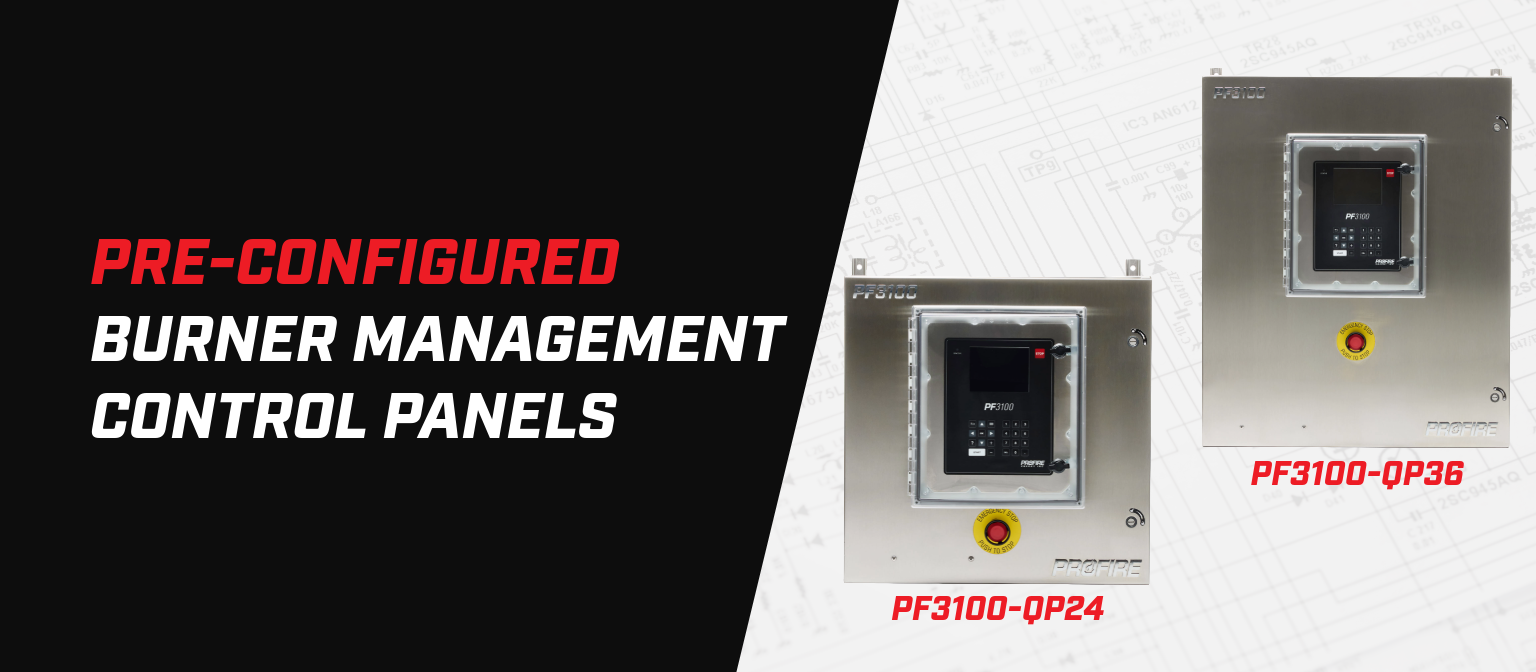
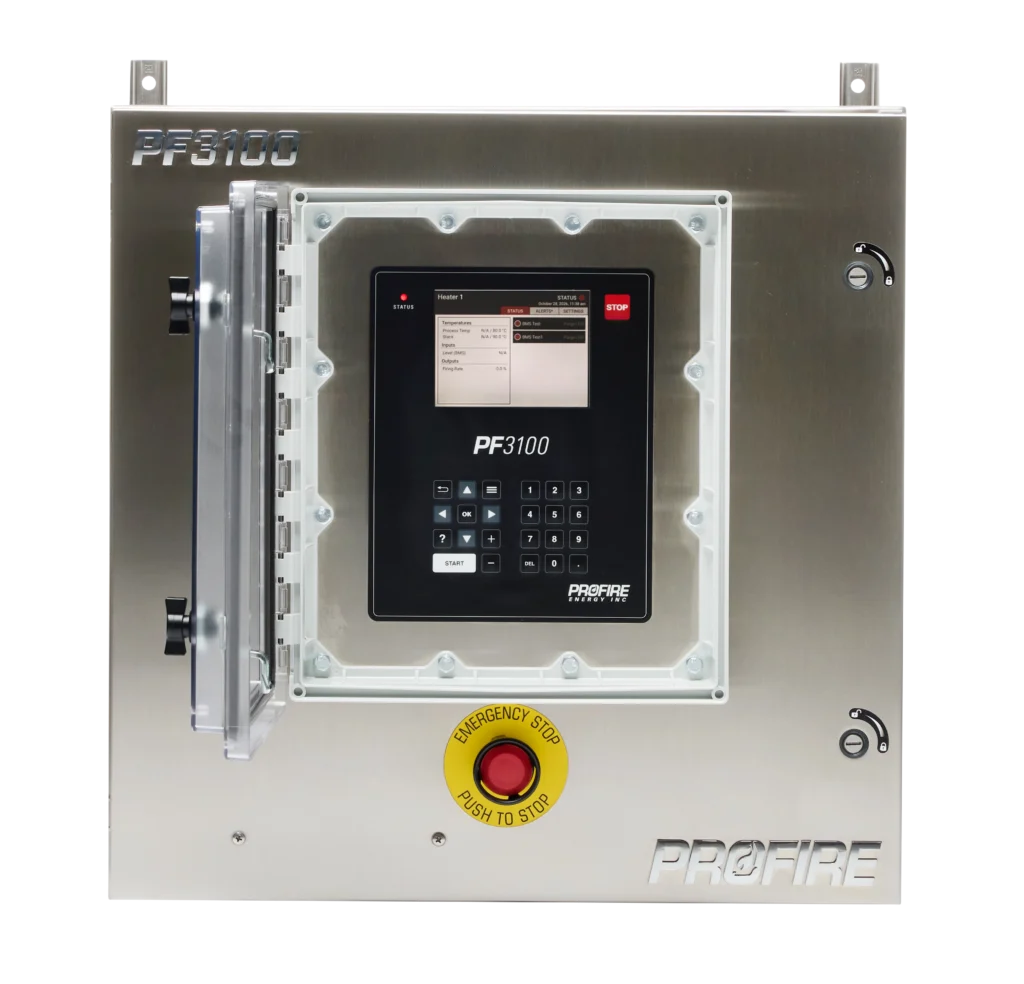
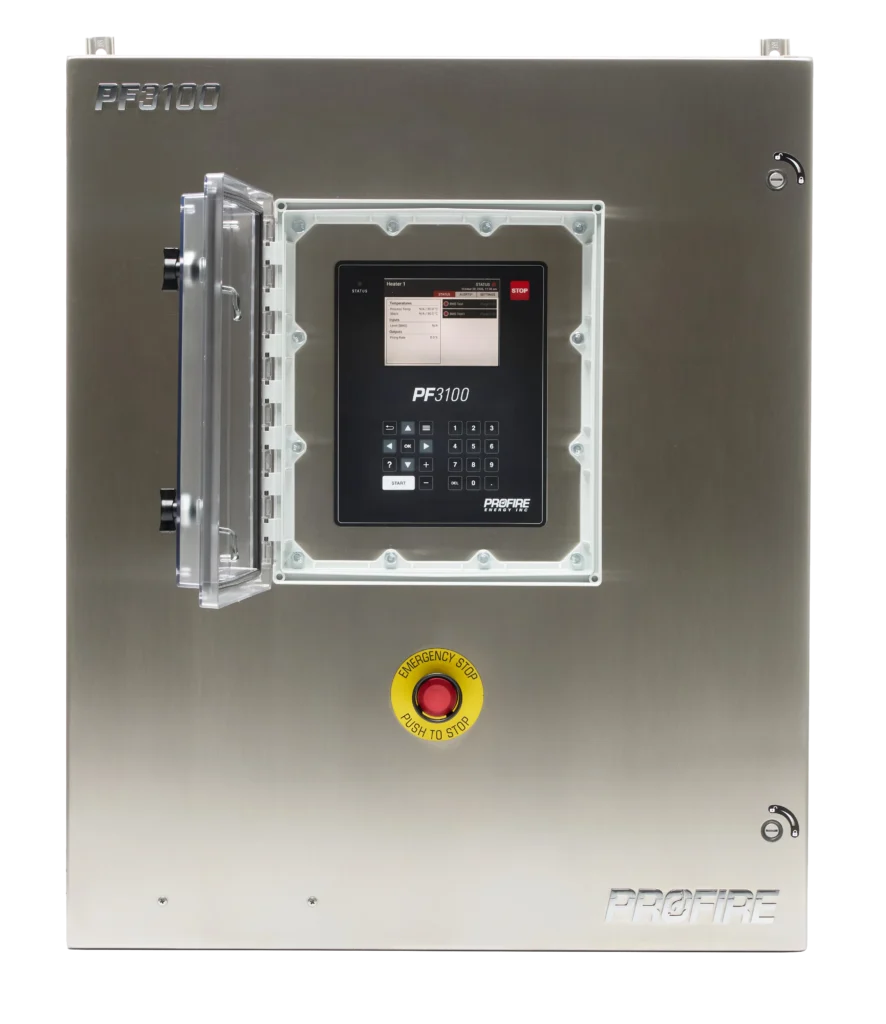
PF3100-QP24
What is the PF3100-QP Control Panel Series?
The PF3100-QP Control Panels are two pre-configured burner management solutions: the PF3100-QP24 for single-burner appliances and the PF3100-QP36 for dual-burner appliances. Both panels run the full PF3100 platform: advanced PID temperature control, UV flame detection, event logging and diagnostics, Modbus communications, and I/O expansion capability.
This isn’t a simple off-the-shelf control panel; it’s a standardized pre-packaged system, without a reduced control capability. What is standardized is what is included in the enclosure, the wiring, and the scope of supply. Not what the platform can do.
QP stands for Quick Procurement. Quantified performance, quoted promptly, no engineered-to-order cycle.
What ships in a PF3100-QP control panel?
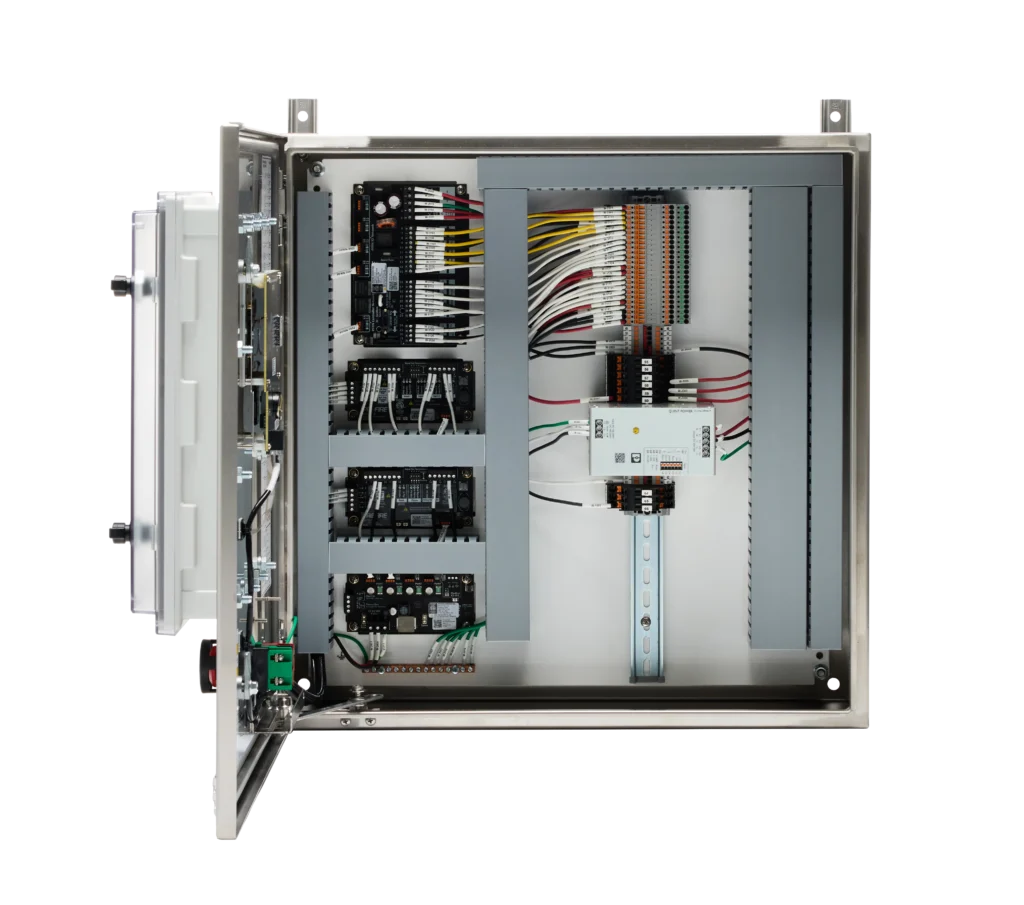
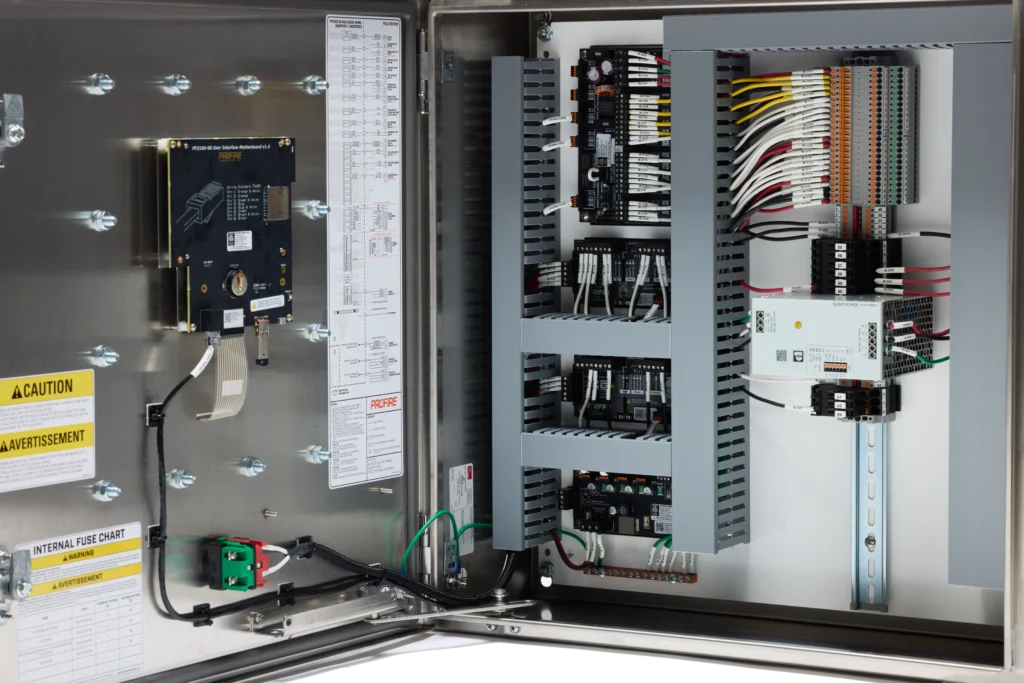
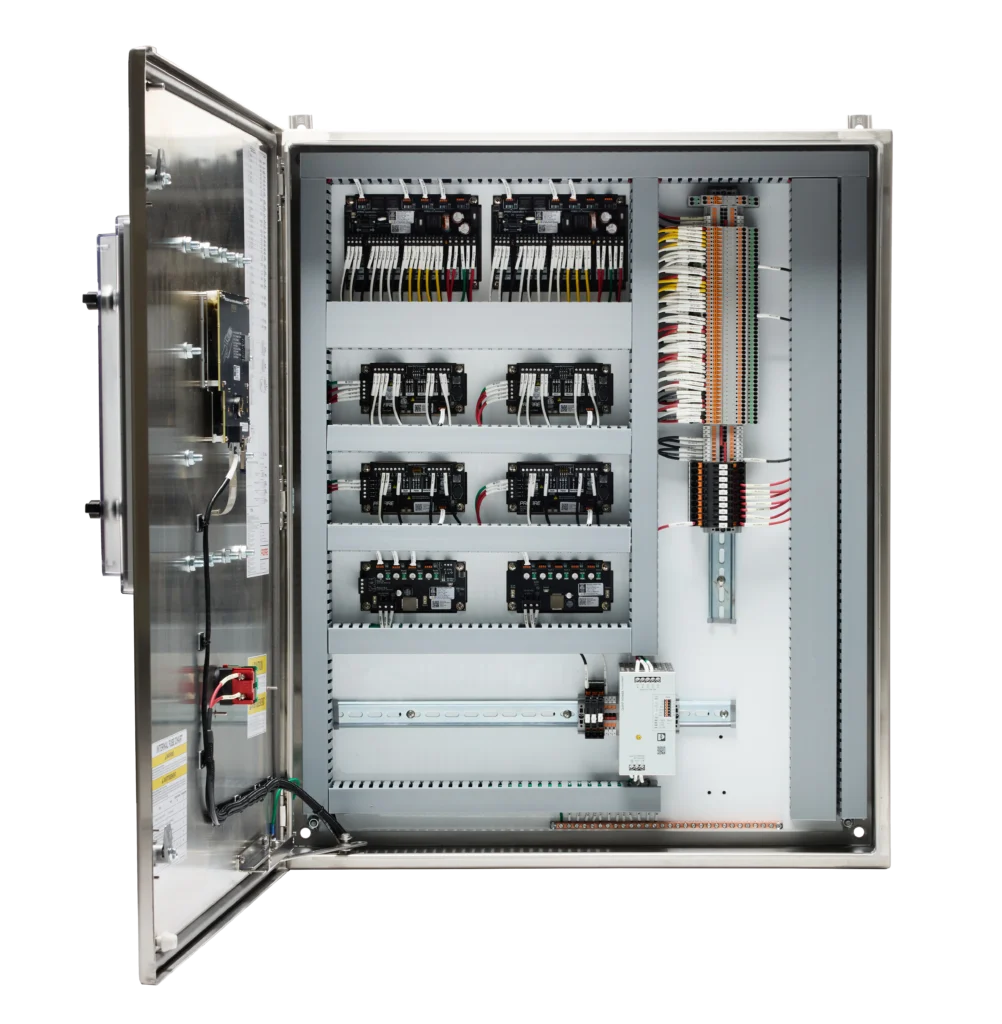
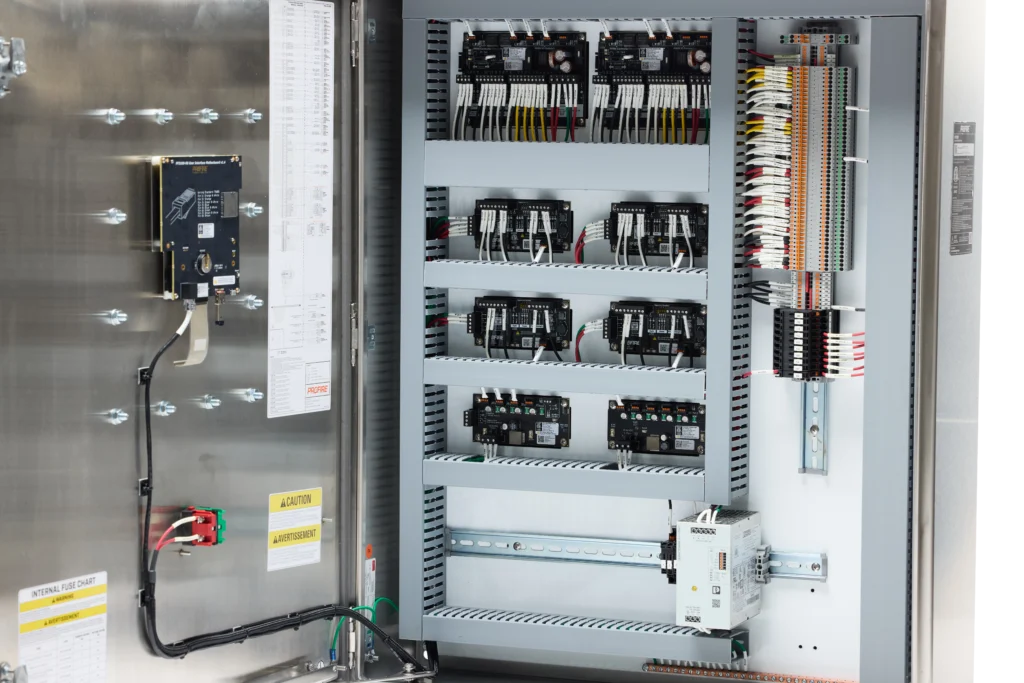
Our team builds and ships the PF3100-QP Control Panels as complete, factory-wired units. The PF3100-QP24 carries one BMS controller card, one user interface card, one UV pilot card, one I/O expansion card, and one Modbus card. The PF3100-QP36 adds a second BMS controller card, a second UV pilot card, a second I/O expansion card, and a network card.
The BMS controller cards and UV pilot cards are factory-installed and pre-wired. An integral power supply and wire marshalling area mean field wiring lands in one place, inside a corrosion resistant stainless steel enclosure rated IP66 and Type 4x. Both panels are rated Class I Div 2 Group ABCD, T4, and Class I Zone 2 Group IIC for the US. Both also carry a 5.7 inch color LCD with Modbus communications.
With the internal integration already done, the work in front of your crew is final connections & configurations, and startup.
What you specify separately
A packaged panel isn’t a packaged appliance. The panel handles the control, and the devices that let it see and act on your equipment mount at the appliance and are ordered separately.
Included in the cabinet
Mounted at the appliance
BMS controller and UV pilot cards
Temperature Module
User interface, I/O expansion, Modbus
Ion Pilot EPX Module
Integral power supply
UV flame detector
Wire marshalling area
Fuel train components
Every panel needs a Temperature Module at the appliance to run. Flame detection is the other requirement, and it depends on your system’s flame detection needs. Both panels are provisioned for UV flame detection, so the UV pilot card and internal wiring are handled in the panel, and you specify the detector. On ionization applications, the Ion Pilot EPX Module fills that role instead.
Order these external components with your panel, so one purchase order covers the panel, the modules, the fuel train, and the instrumentation, with one vendor accountable for how they work together.
PF3100-QP24 Interior 1PF3100-QP24 Interior 2
Which PF3100-QP Control Panel fits your application?
Count the burners and you’ve mostly picked your panel. A single-burner appliance takes the PF3100-QP24 Control Panel. A dual-burner appliance takes the PF3100-QP36 Control Panel, because two burners need two BMS controllers running independently.
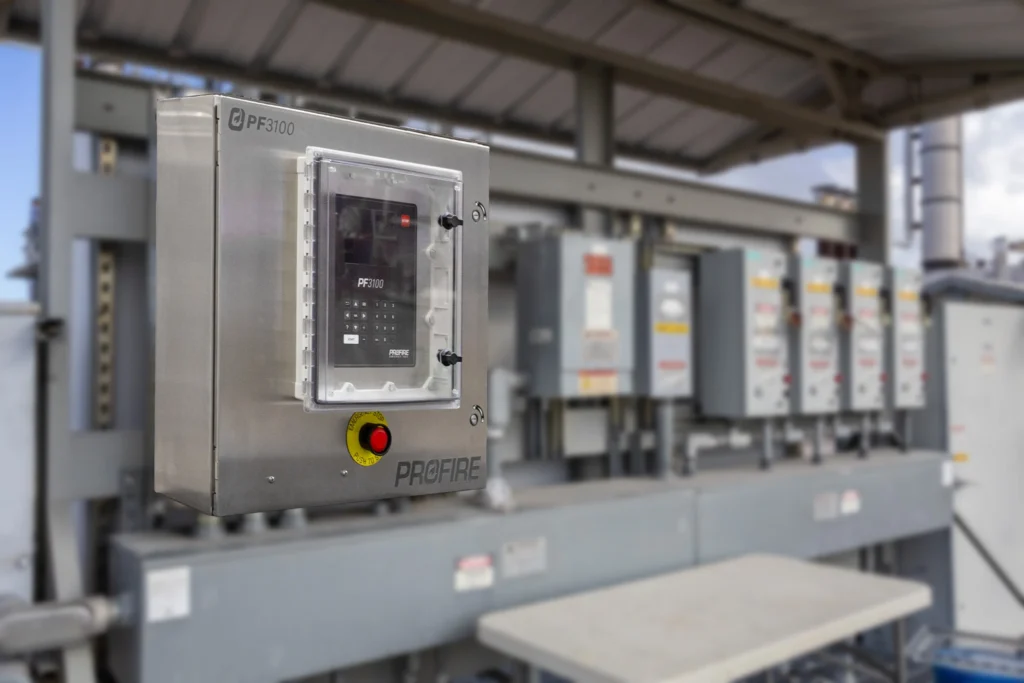
The PF3100-QP24 suits line heaters, heated tanks, heated separators, glycol dehydrators, and smaller treaters. The PF3100-QP36 suits amine reboilers, combustors, ECD and VDU units, gas production units, and larger treaters and separators.
Two things can push a borderline application up to the larger panel: the second BMS controller card doubles the I/O count at the enclosure level, and the larger cabinet (36”) gives electricians more room for installation and during service.
What doesn’t change between the two burner management control panels
Beyond burner count, very little changes between the two. Draft type, application, certifications, environmental rating, and control capability are identical across both. Both handle natural draft and forced draft appliances. Both run the full PF3100 platform.
That keeps selection from turning into a specification exercise. You aren’t trading capability for availability, and you order either panel the same way: main valve power, then draft type.
PF3100-QP36
What does a PF3100-QP Control Panel change on a project?
A PF3100-QP Control Panel takes the design cycle out of the project. We did the engineering once against a defined set of common applications, so you select and validate a panel before a PO exists instead of waiting on drawings.
On an engineered-to-order panel, scope, I/O, drawings, and revisions all get worked through before the cabinet is built. That process produces an exact fit, and for a lot of equipment it’s the right way to buy a panel. Until the drawings are agreed, though, the quote and the delivery date are both estimates, and a custom order project carries significant lead time compared with a PF3100-QP Control Panel.
Changes are where you feel it most. If the burner count shifts from one to two, or the main valve turns out to be DC instead of AC, an engineered design goes back for re-approval. On a PF3100-QP Control Panel, both are choices made at order: burner count picks the model, and main valve power is one of the two ordering selections.
Once the panel is on-site, the same team carries the project through startup and commissioning, operator training, and ongoing service.
What certifications do the PF3100-QP Control Panels carry?
Both are certified for use as a BMS Controller to:
Approved operating temperature runs from -40°F to 104°F (-40°C to +40°C), with power input at 120VAC. The PF3100 platform is SIL 2 Capable under IEC 61508, as is the wider Profire BMS controller line. Confirm the certification scope against your site requirements.
PF3100-QP36 Interior 1PF3100-QP36 Interior 2
When is an engineered-to-order panel the right call?
An engineered-to-order panel is the right call when the appliance needs a design built around it. Some applications need more than a standard package, and the engineered-to-order route is available for those requirements. It runs on the same PF3100 platform. Choose it when the application:
runs more than two burners, or multiple pilots
needs I/O or ports beyond what the two standard packages support
requires shutdown logic that interlocks with plant systems outside a standard sequence
must meet a site standard for enclosure or control architecture
needs forced draft capabilities such as parallel positioning, fuel and air ratio control, or O2 trim enabled on a single-burner panel
That last one catches people. The platform is capable of it, but getting it configured on a standard panel is customization work, and that puts the project back into the design cycle. If you need it, plan an engineered panel from the start instead of finding out mid-quote.
Three checks before your next project starts
Run these before the next RFQ goes out.
Count the burners. One points to the PF3100-QP24, two to the PF3100-QP36, more than two to the engineered route.
Compare the last three panels your sites installed. If the differences were setpoints, draft type, and valve power rather than control architecture, the same design has been specified more than once.
Check the appliance, not the P&ID. Burner count, draft type, and valve power are properties of the equipment, and all three are easier to confirm before the order than after.
See whether a PF3100-QP Control Panel fits your next project
If your next project is a single or dual-burner appliance, a PF3100-QP Control Panel gives you the full PF3100 platform without starting a design from scratch. You pick the model by burner count, choose main valve power and draft type, and confirm fit against a published specification before the PO goes out.
The panel arrives factory-wired, with the BMS controller’s cards, integral power supply, and wire marshalling already in place, so your crew’s work comes down to final connections & configurations, and startup.
Order the modules, fuel train, and instrumentation with it, and one purchase order covers the lot. The same team then carries the project through startup and commissioning, operator training, and ongoing service.
Tell us about your application, and we'll help you confirm which PF3100-QP Control Panel fits and what to order with it. Find your PF3100-QP Control Panel
Frequently Asked Questions About Standardized Burner Management Control Panels
What is a pre-configured burner management control panel?
A pre-configured burner management control panel is a complete, factory-wired cabinet containing the BMS controller, integral power supply, and wire marshalling area for a defined set of common applications. The design happens once rather than per project, so the panel is selected against a published specification before a PO exists.
What is the difference between the PF3100-QP24 and PF3100-QP36?
Burner count. The PF3100-QP24 is a single-burner control panel and the PF3100-QP36 is a dual-burner control panel, using a second BMS controller card so each burner runs its own independent safety control. Both run the full PF3100 platform and carry the same certifications. The second card also doubles the I/O count at the enclosure level.
How is a BMS controller different from a PLC-based burner management system?
In a burner management system vs PLC comparison, the main difference is how the logic gets set: a dedicated BMS controller is configured through its interface, while a PLC-based system is programmed in software. Setpoints, timings, and sequence options on a PF3100 are selected at the panel, so a technician can adjust a setpoint or read a shutdown code without a software license. PLC-based systems offer broader flexibility and need programming support to change. Where a PLC is being added alongside the burner management system, confirm with the authority having jurisdiction how the listing applies to the combined arrangement while the design is still open.
Do the PF3100-QP Control Panels support forced draft appliances?
Yes. Both handle natural draft and forceddraft. Forced draft capabilities such as parallel positioning, fuel and air ratio control, and O2 trim sit outside the standard configurations, and enabling them takes customization through the engineered-to-order route rather than a standard order.